Artifacts
36 files from Kubb: Throwing Wood, kept as they were.
The throw #
One baton from wind-up to wood, on the practice pitch, as the Playdate Simulator drew it on November 13, 2026, the first day of building.
-
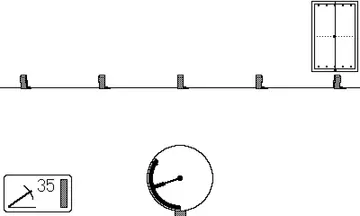
The wind-up #
The crank turned back past the bottom of its turn. The dial shows the arm, the dark arc is the backswing, and the five kubbs on the far baseline wait.
-
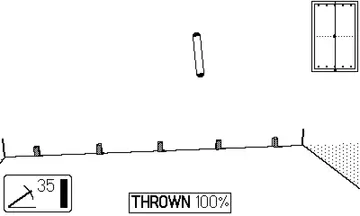
A baton in flight #
Thrown at full power with 35 degrees of loft. The camera follows the baton down the pitch, and the small map in the corner shows the whole of it.
-
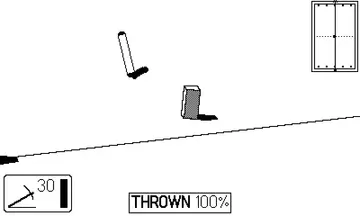
The hit #
A baton coming off a base kubb, which has started to tip. The game slows down around a hit so it can be watched.
-
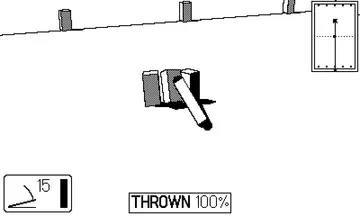
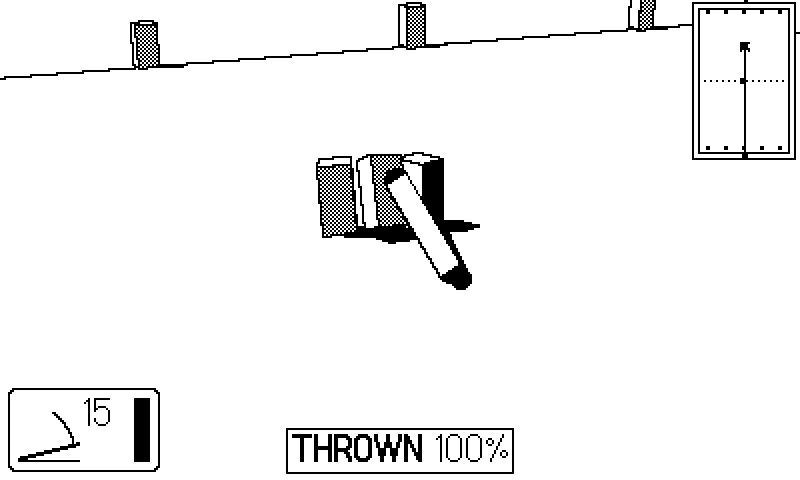
Three kubbs and one baton #
A low baton into three field kubbs standing together. Every piece is a solid body, so what falls is worked out, not chosen.
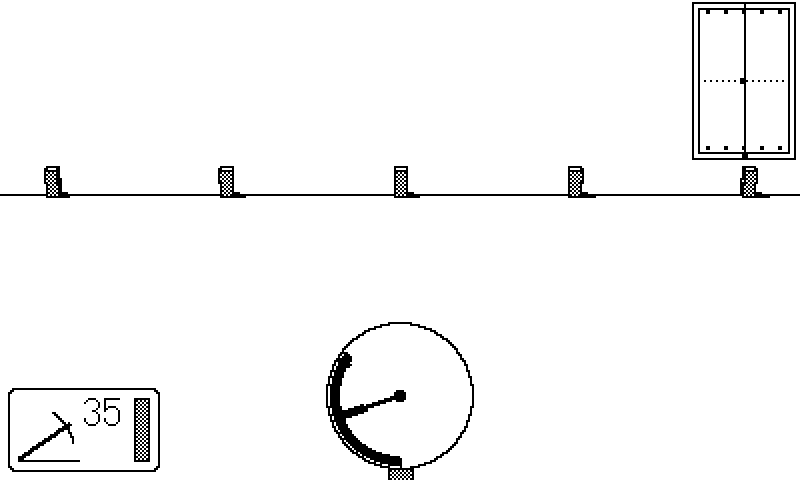
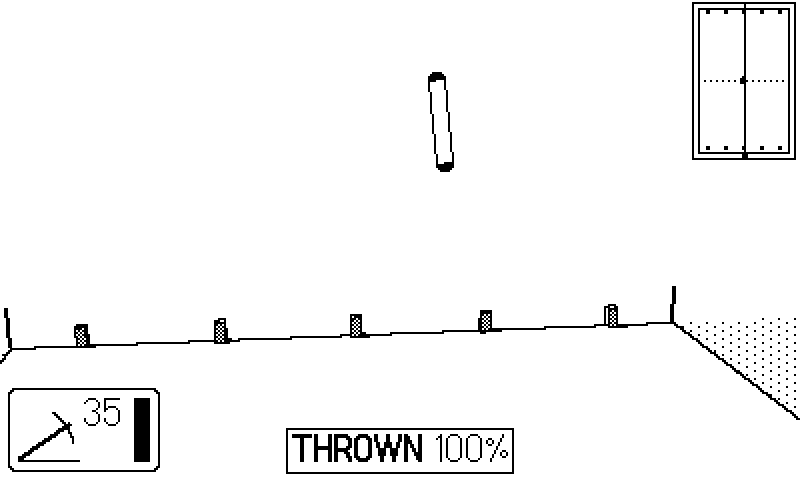
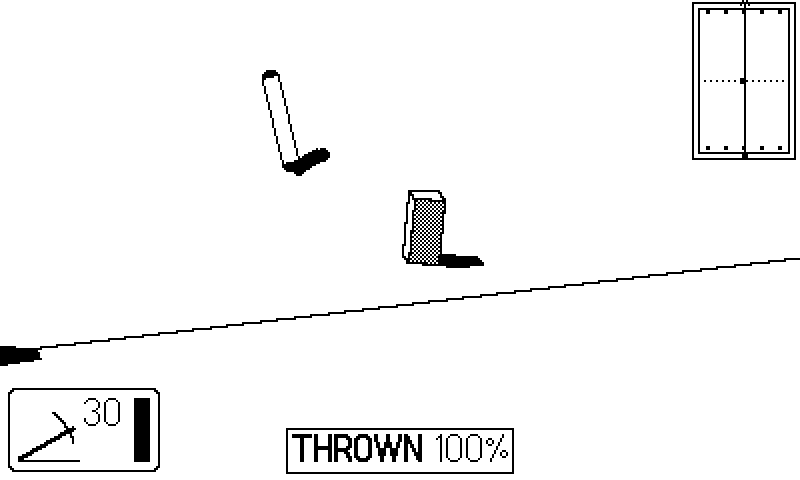
A match #
Two teams passing one Playdate, from the same day, and the first match played on the real thing.
-
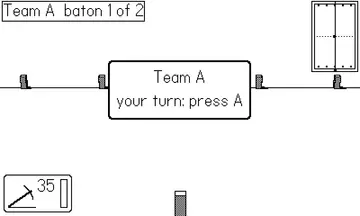
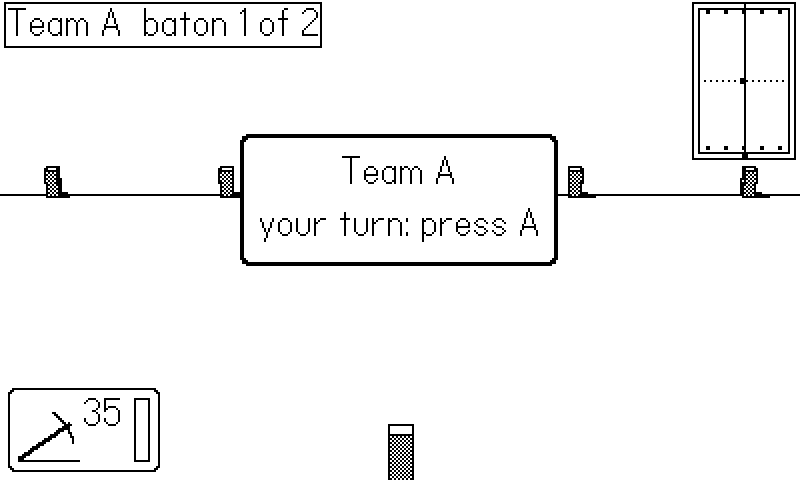
The hand-off #
The card between turns. Team A opens with two batons, Team B answers with four, and every turn after that has six.
-
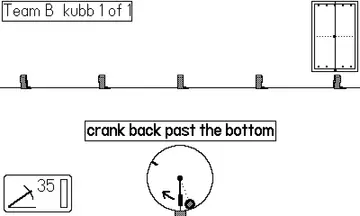
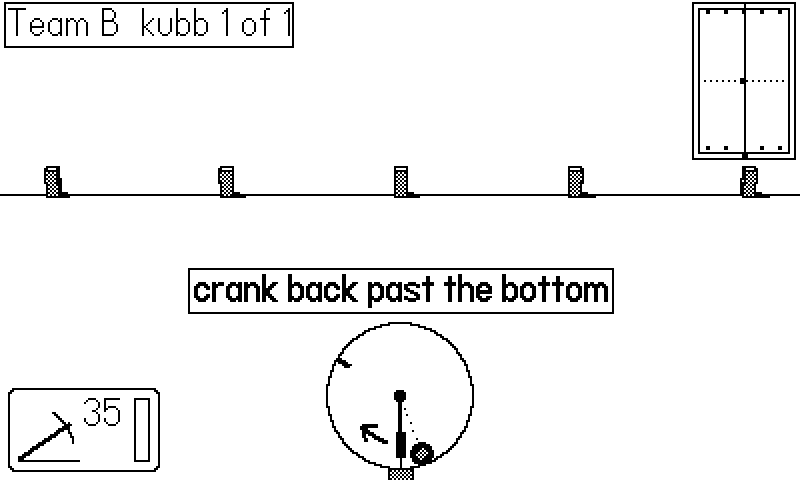
Team B’s turn #
The pitch turned around for the other team, with one kubb to toss back before the batons. Whoever is throwing always throws up the screen.
-
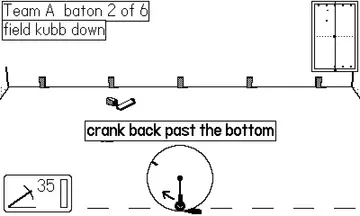
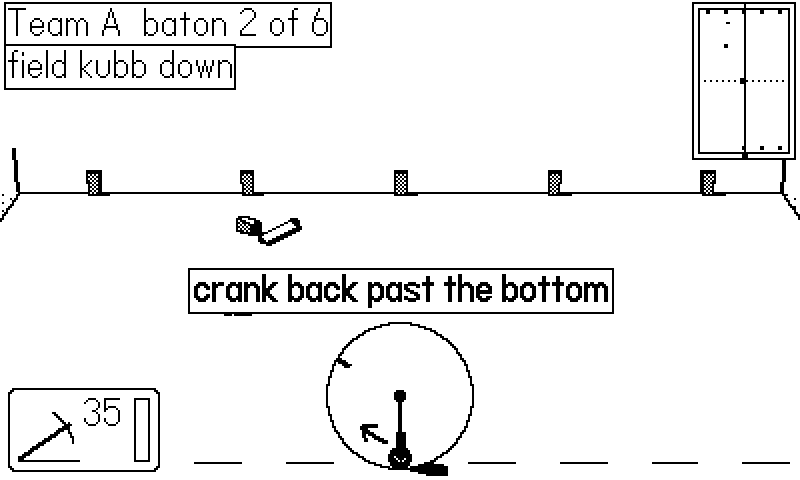
Mid-turn #
Team A’s second baton of six. The field kubb the first baton knocked down, and that baton, stay where they fell until the turn is over.
-
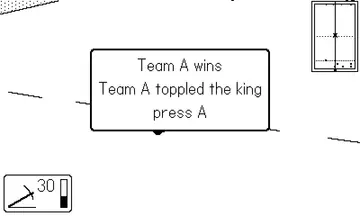
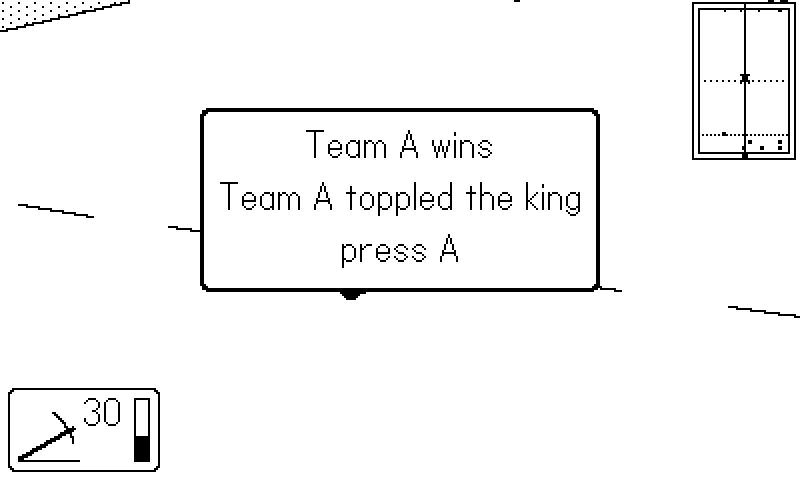
The king is down #
The end of a match the game played against itself as a test, five turns long.
-
The first match #
The game file from the first match played on a Playdate, on November 13, 2026, in Planet Kubb Notation. Six turns in seven minutes, and it ended when Team B resigned.
The brief #
What a design session was asked on November 13, 2026, with the game playing and no look yet, and five more screens from that day’s build to set beside the ones above.
-
The design brief #
Written for the design session: the game in one paragraph, the Playdate’s limits (400 by 240 pixels, black and white, about 8 milliseconds to draw a frame), what was wrong with each screen, and what to bring back. It names eleven captures of the game as it was; the ones not already shown above are in this bundle.
-
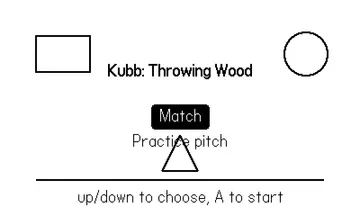
The title, before #
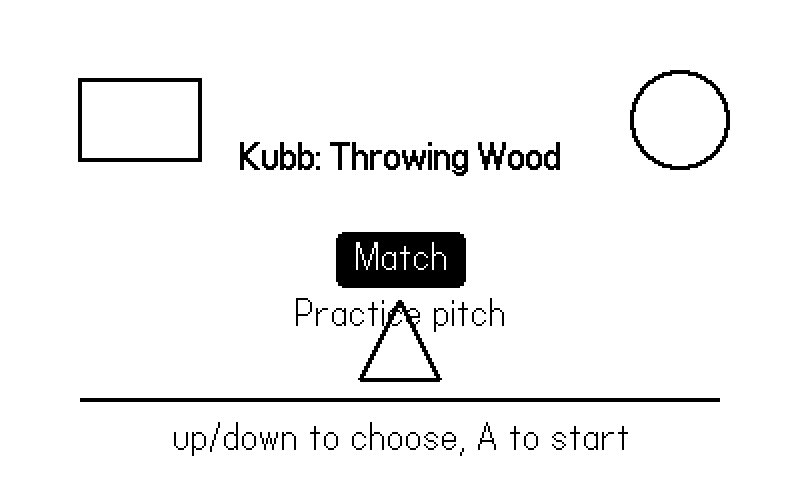
The name in the system font, a two-line menu of Match and Practice pitch, and a rectangle, a circle and a triangle holding places. The brief called it a placeholder.
-
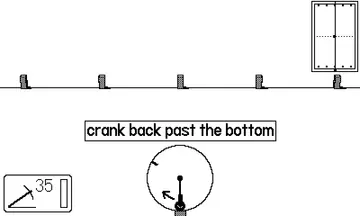
Aiming, before #
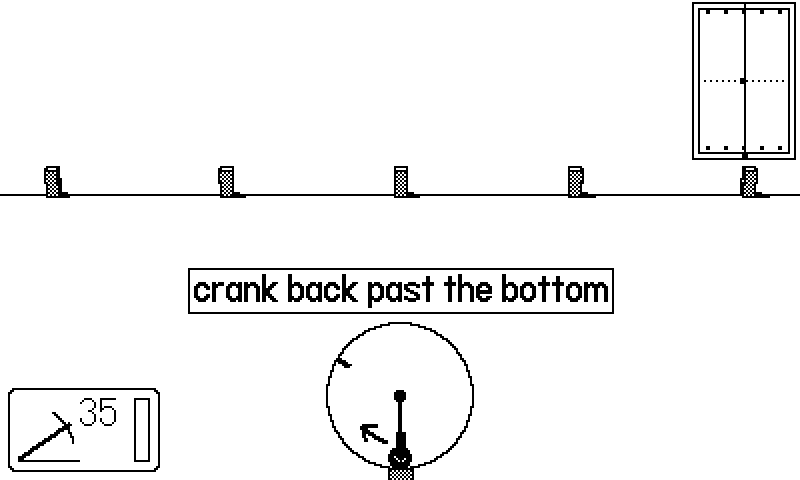
Five base kubbs on the far baseline, the swing dial in the middle of the pitch with its prompt over it, and the loft at 35 degrees.
-
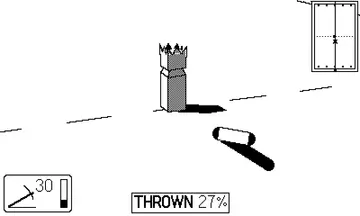
The king, before #
A baton gone past the king at 27 percent. The crown reads, and the shading is one flat pattern.
-
Throwing a kubb, before #
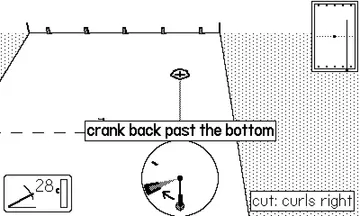
Aiming a kubb back across the pitch: a landing marker on the grass, a grey power band on the dial, and a note in the corner that the cut curls right.
-
Where it landed, before #
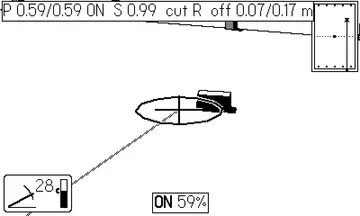
A thrown kubb at rest beside its marker, ON at 59 percent, under a line of debugging numbers across the top of the screen.
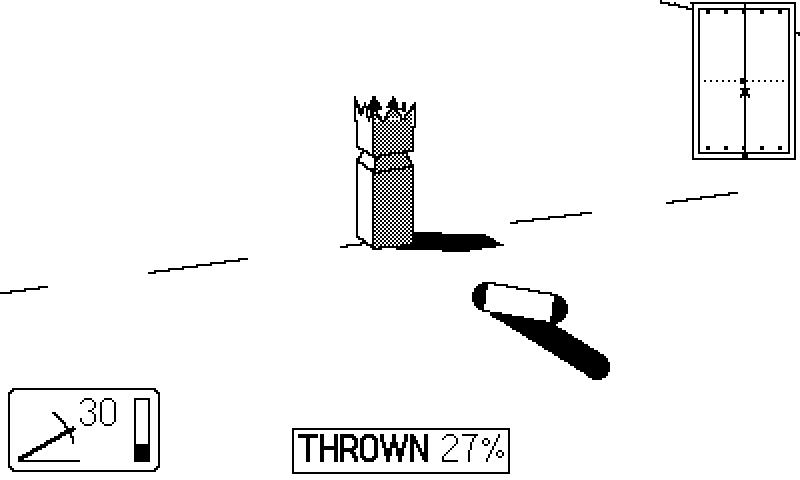
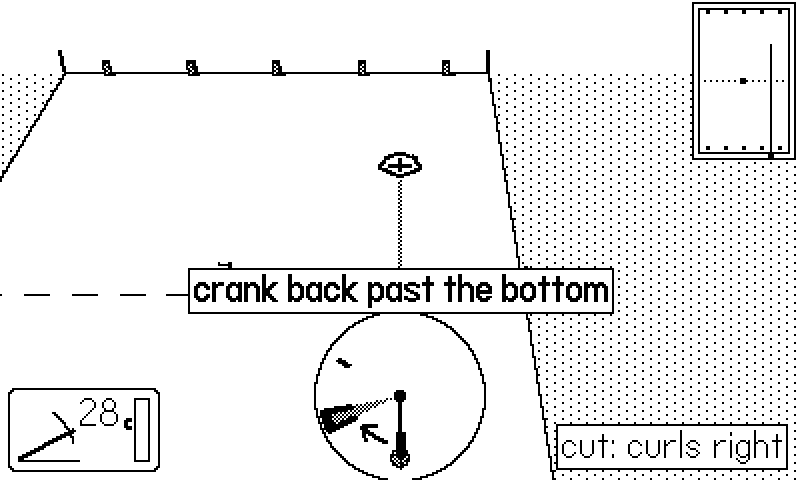
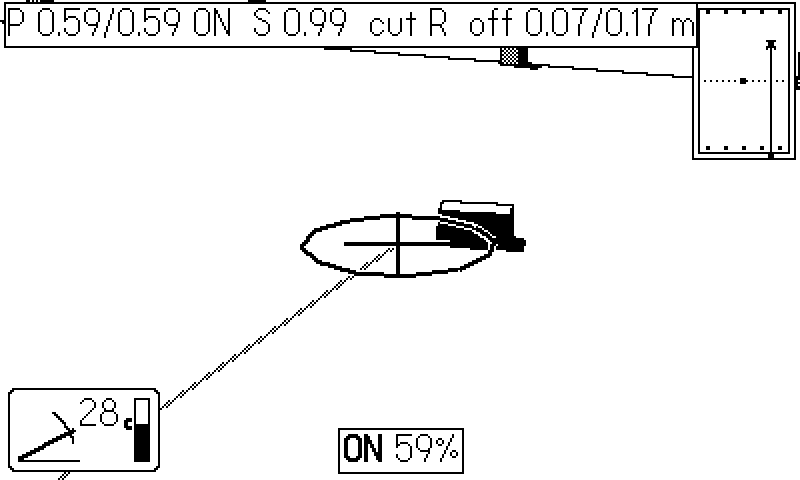
The look: Woodcut #
The look the design session settled the same day, three tones, hard shadows and a white pitch. Jamie approved it that day, and it is being built into the game. The boards set their words in two web fonts that stand in, Londrina Solid and Space Grotesk; the game is to draw its own 1-bit fonts.
-
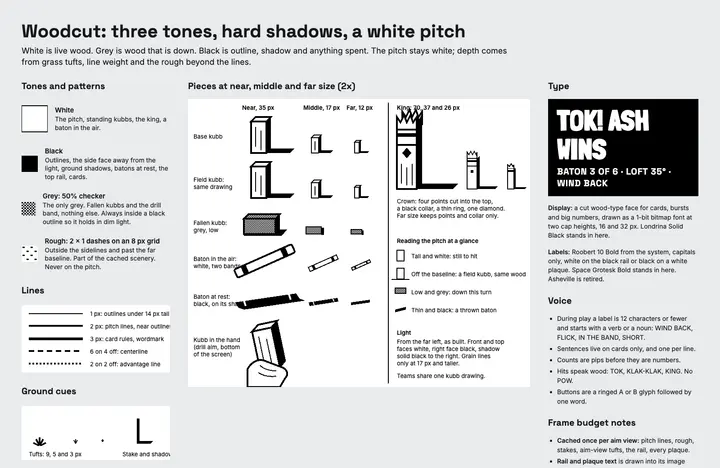
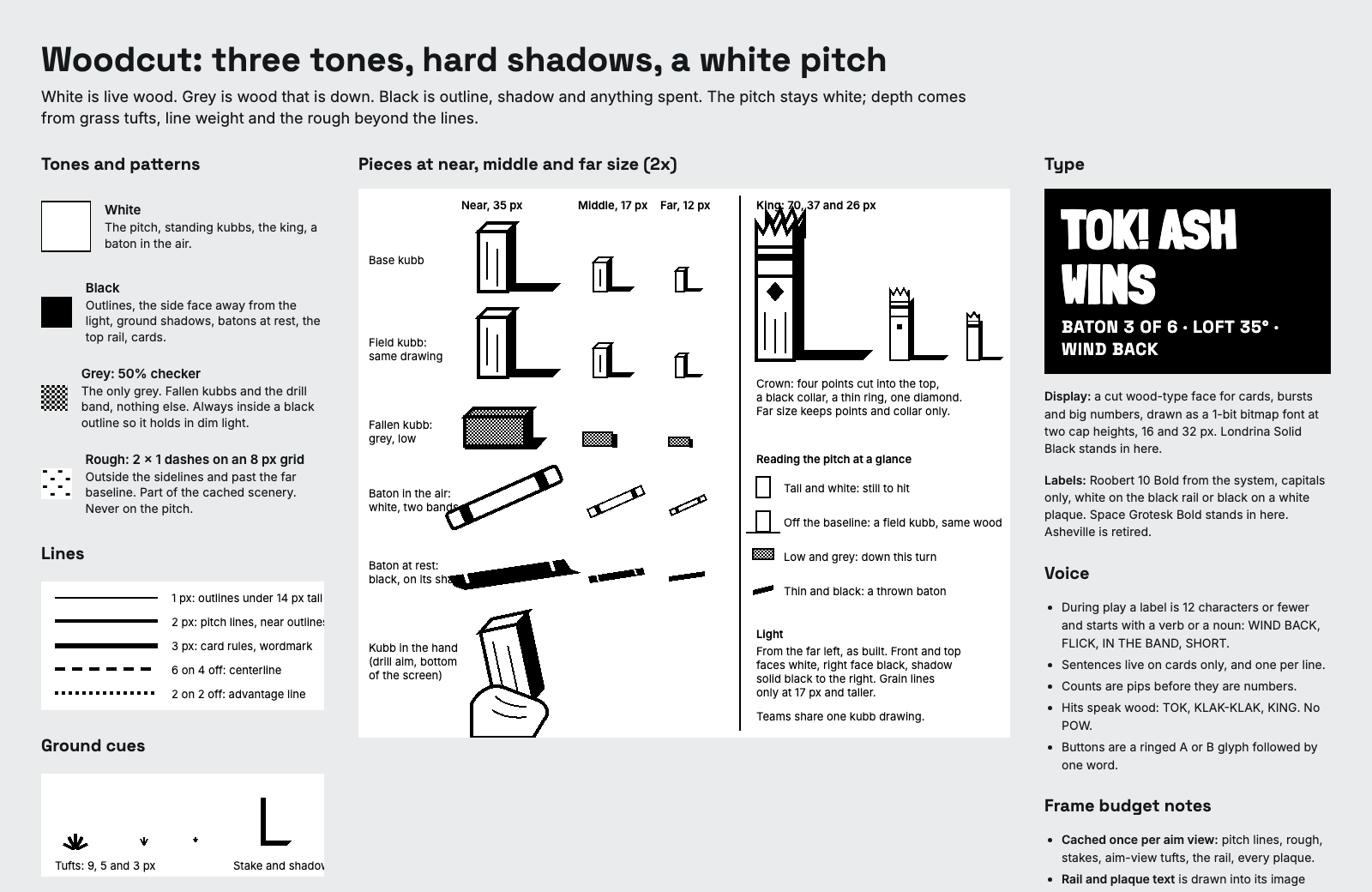
The style sheet #
White is live wood, grey is wood that is down, and black is outline, shadow and anything spent. Kubbs, the king and batons at near, middle and far sizes, the line weights, grass tufts and stakes, and the rules for type and labels.
-
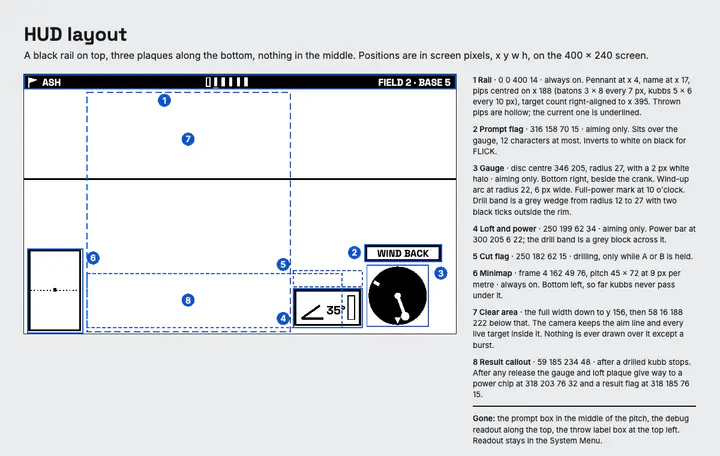
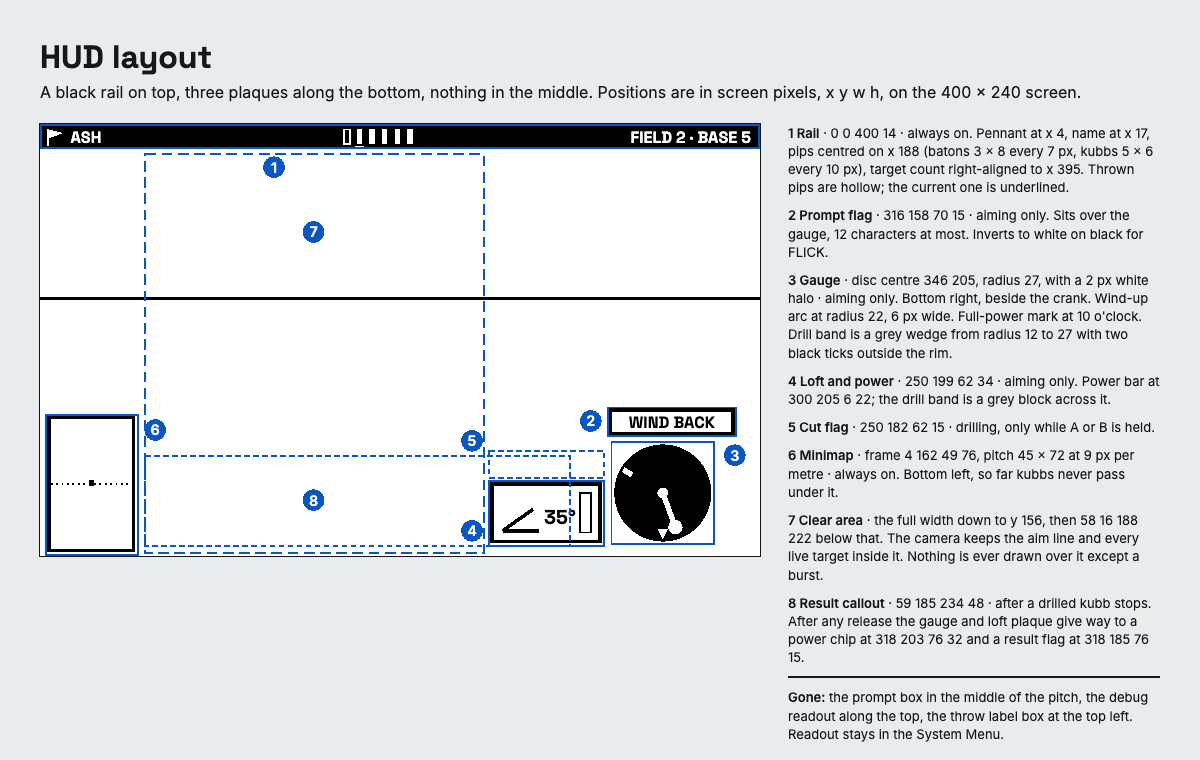
The HUD layout #
A black rail along the top, three plaques along the bottom and nothing in the middle, with the place of each piece in screen pixels. The minimap sits bottom left and the swing gauge bottom right, beside the crank.
-
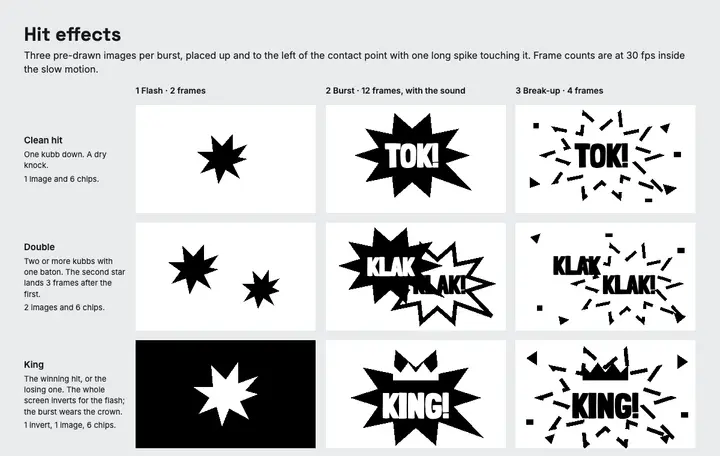
Hit effects #
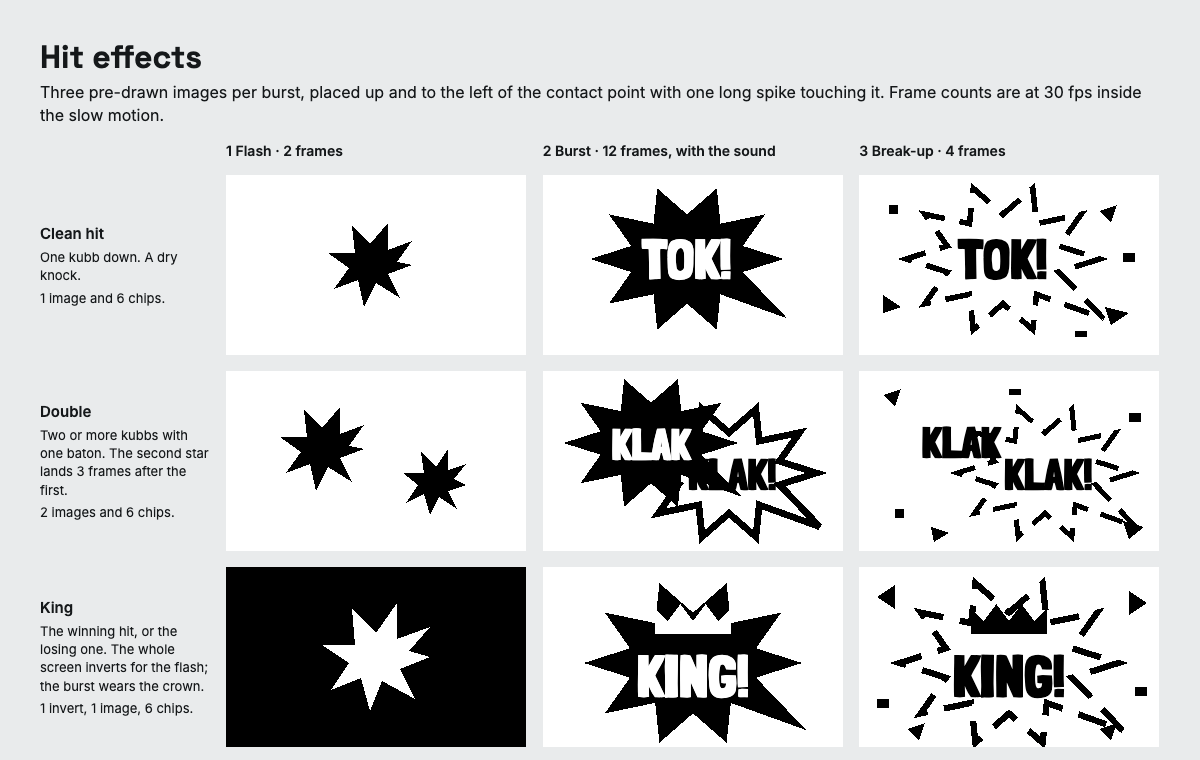
Flash, burst and break-up for each kind of hit: TOK! for one kubb, KLAK and KLAK! for two with one baton, and KING!, where the whole screen inverts for the flash and the burst wears a crown.
-
The written spec #
The look in words, to build from: the tones, line weights and pieces, every HUD position, the frames of each hit, the type, the drawing budget for each frame, the launcher, and the details still open. The SVG sources it mentions are not published here. Taken out: one sentence quoting Jamie’s approval.
Screens in the new look #
The screens from the brief drawn again in Woodcut, at twice the Playdate’s size. They are mock-ups, not captures. ASH and BIRCH stand in for team names, which the game cannot take yet.
-
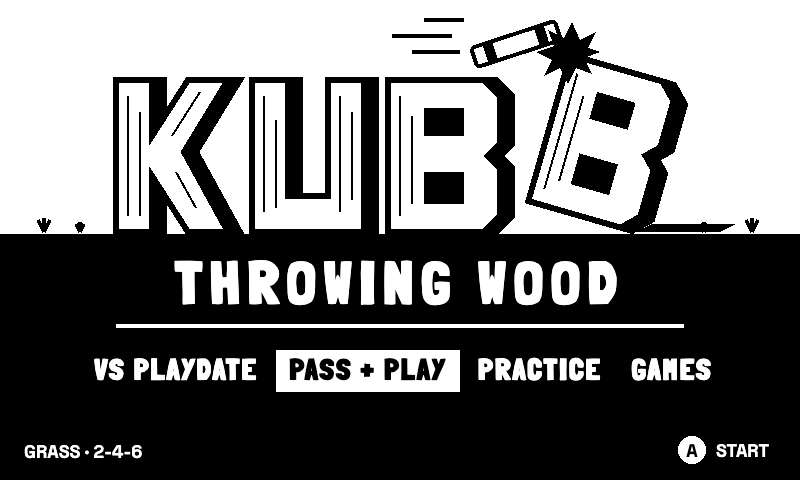
The title #
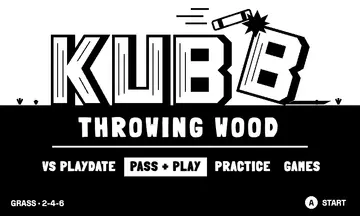
The KUBB wordmark, its last B knocked over by a baton, above THROWING WOOD on a strip of grass. VS PLAYDATE and GAMES on the menu are for a computer opponent and saved games, which are still to come.
-
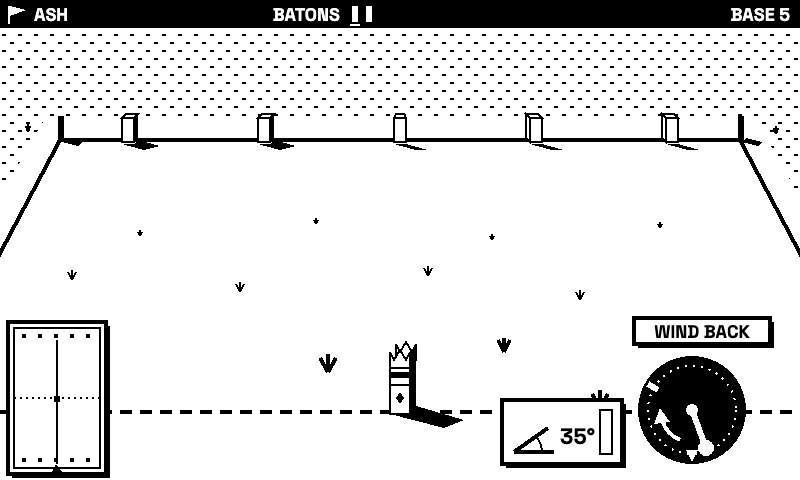
Aiming #
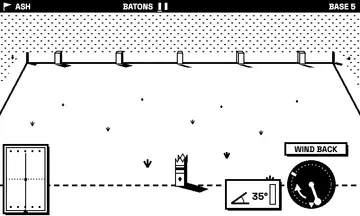
The king on the centerline, five base kubbs on the far baseline, the rough past the lines, and WIND BACK over the gauge. Pips on the rail count the batons.
-
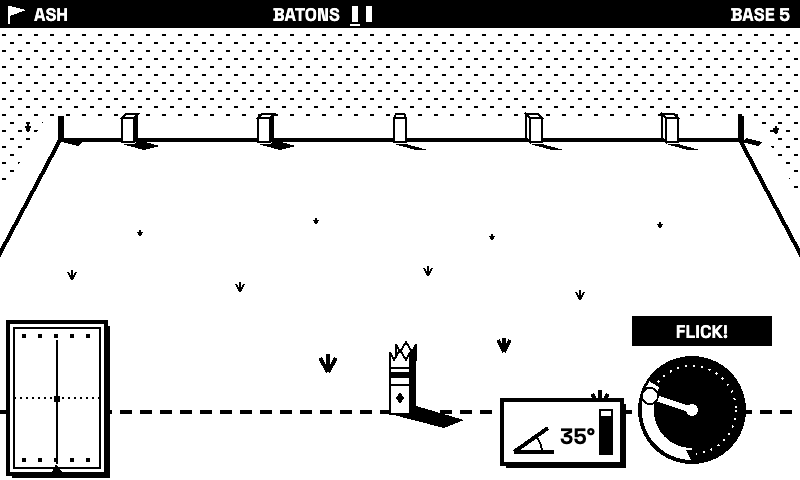
The flick #
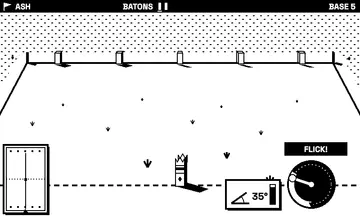
The same view with the arm wound back, and the flag turned black for FLICK!
-
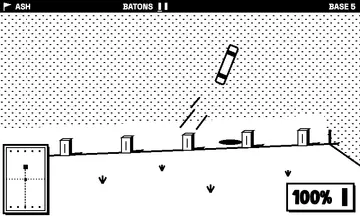
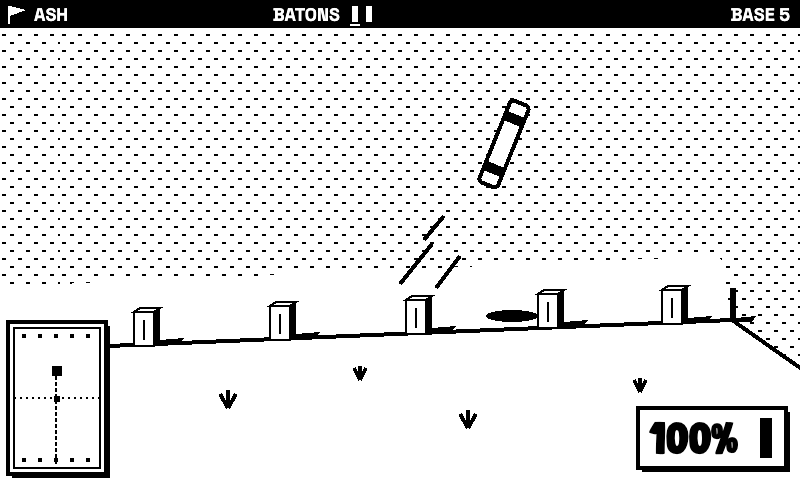
In flight #
A baton in the air, white with two black bands and three speed lines behind it, thrown at full power.
-
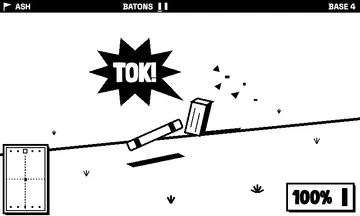
The hit #
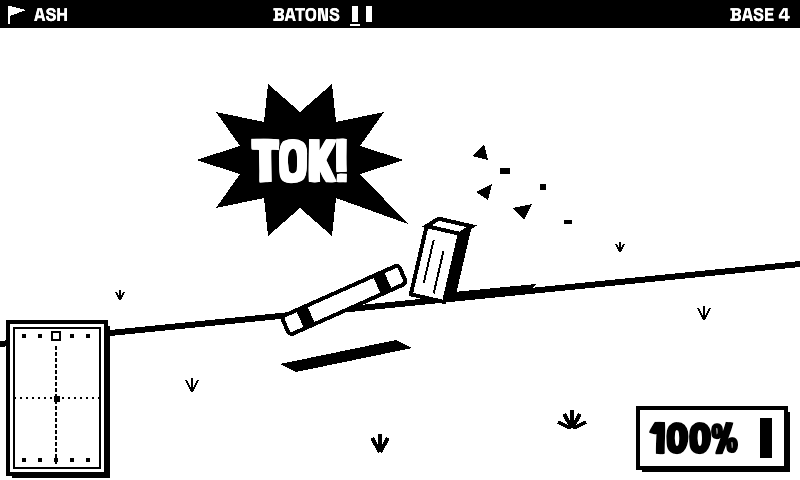
TOK! as a baton tips a base kubb, with chips flying off the burst.
-
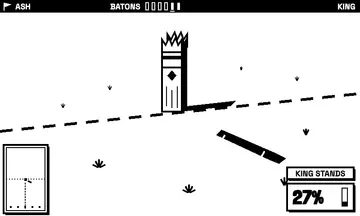
The king #
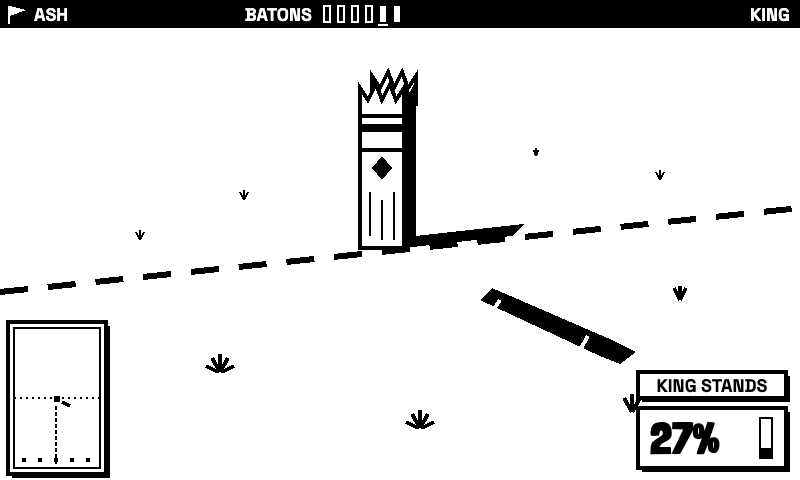
A baton gone past at 27 percent, and the flag says KING STANDS. The crown has four points, a black collar, a ring and one diamond.
-
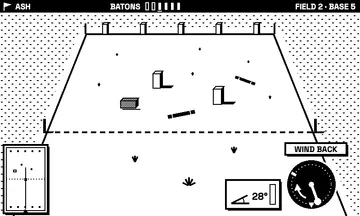
Mid-turn #
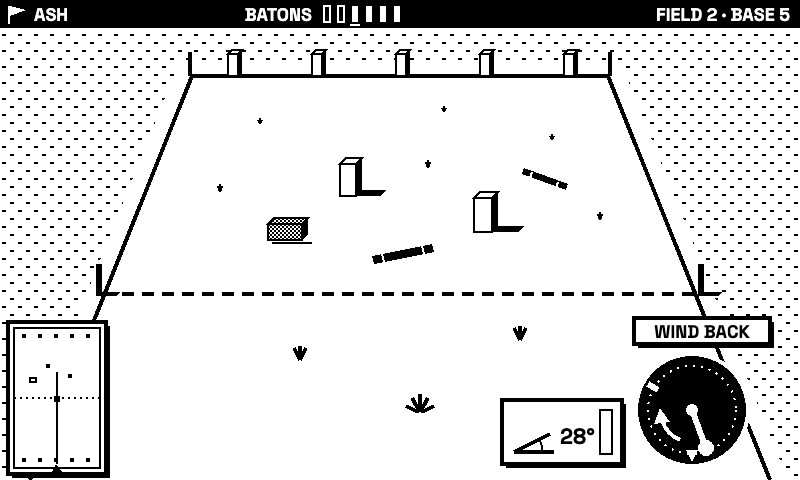
Two field kubbs standing, one grey and down, and two black batons already thrown, so what is left to hit reads at a glance.
-
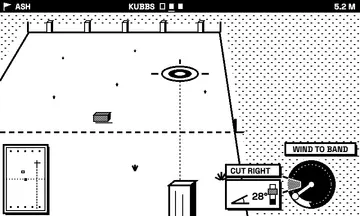
Throwing a kubb #
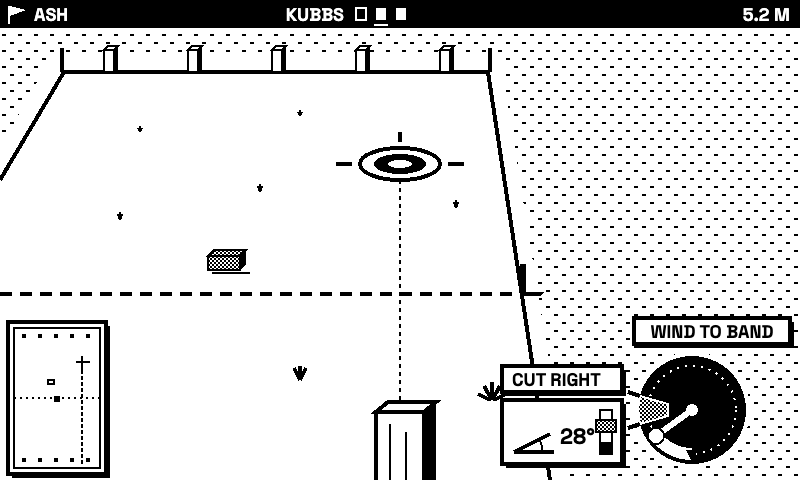
The kubb in the hand at the bottom, the landing marker out on the pitch, the grey band on the gauge, and CUT RIGHT while a button is held.
-
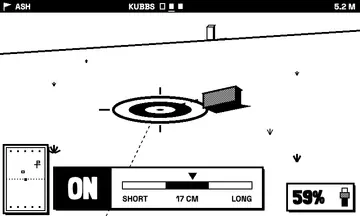
Where it landed #
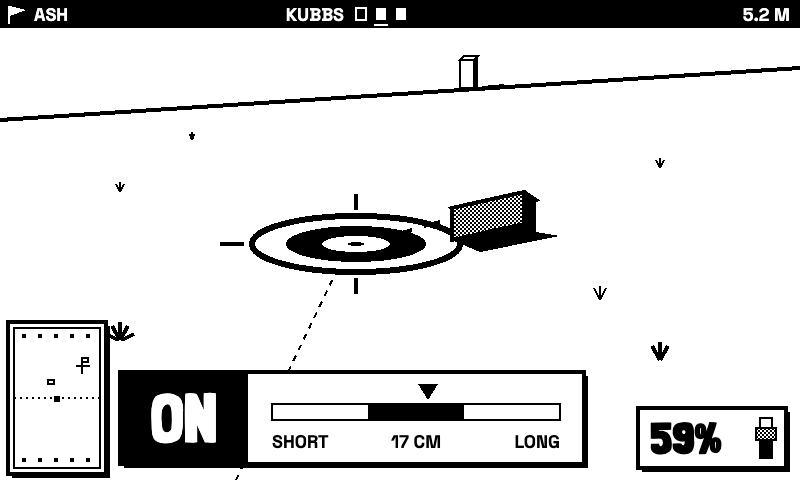
The callout after a thrown kubb stops: ON, 17 centimeters from the mark, between SHORT and LONG.
-
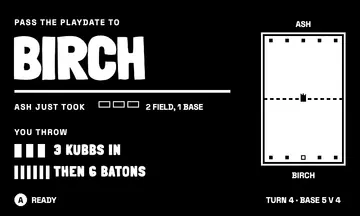
The hand-off #
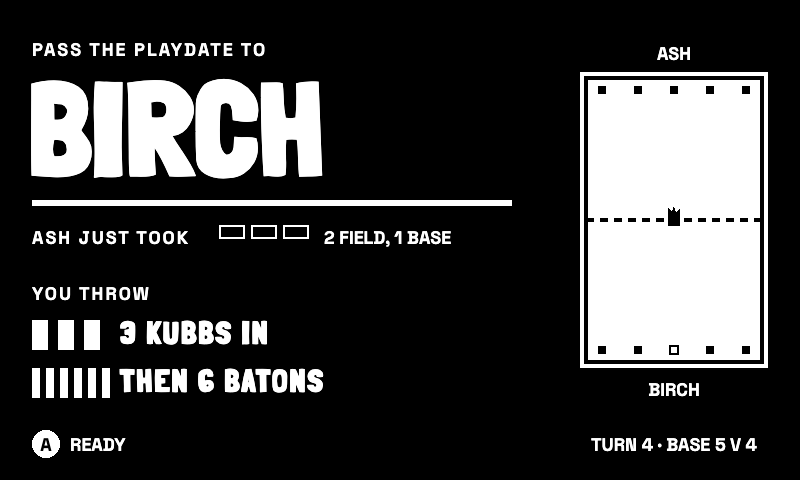
PASS THE PLAYDATE TO BIRCH, what ASH just took, and what BIRCH throws next, three kubbs in and then six batons, beside a map of the pitch.
-
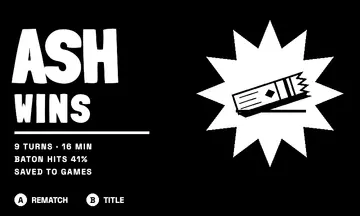
The winner #
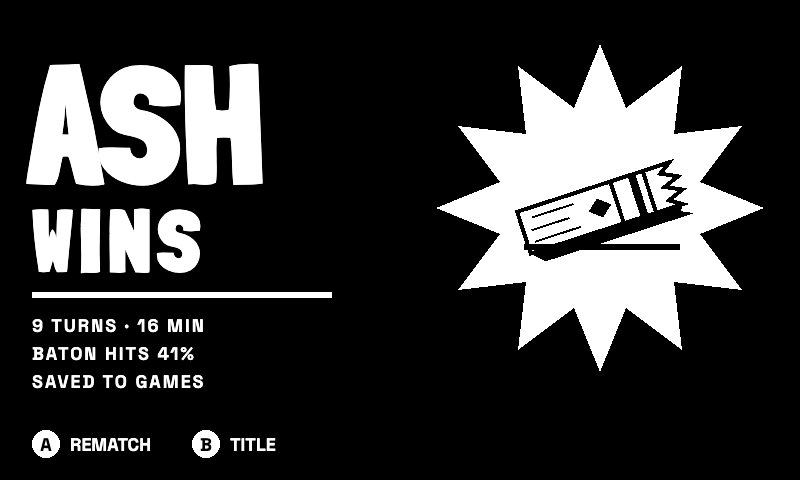
ASH WINS, with the turns, the minutes and the hit rate, and a broken king in a burst. Its SAVED TO GAMES line is for saved games, which are still to come.
Later screens, sketched #
Parts of the game that are not built yet, sketched in the same session so the look is ready for them. The games, names and scores on them are made up.
-
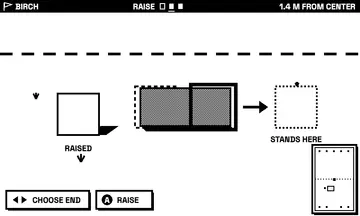
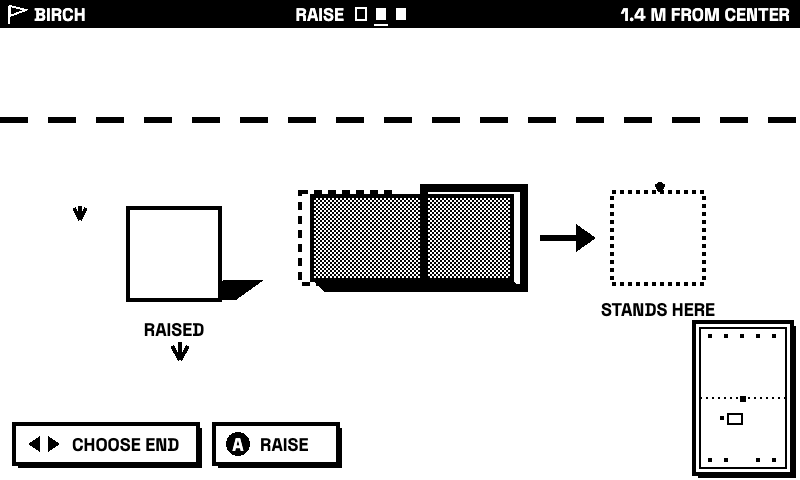
Raising a kubb #
Choosing which end of a fallen field kubb to lift, and where it will stand.
-
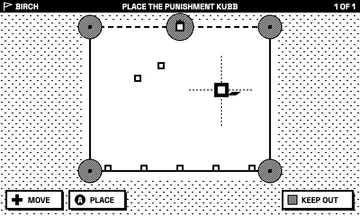
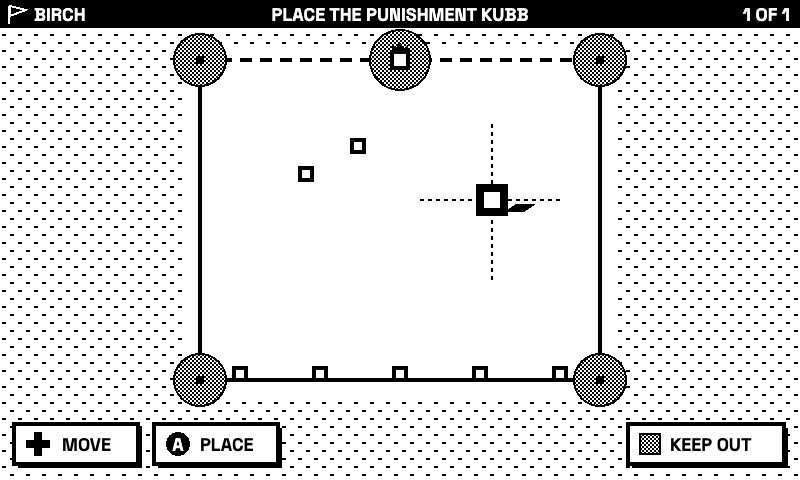
The punishment kubb #
Placing a kubb from above, with grey circles around the stakes where it may not go.
-
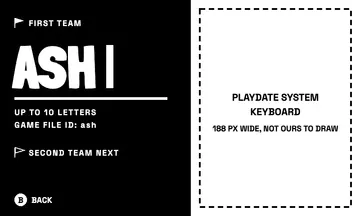
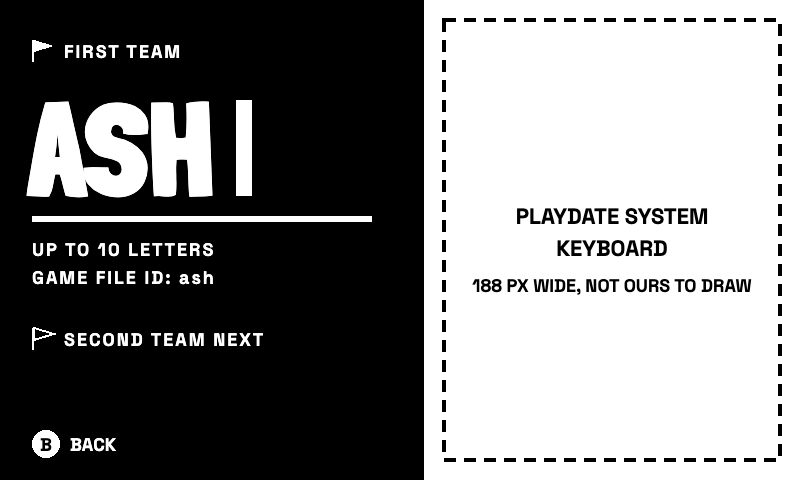
Naming the teams #
A team’s name, up to ten letters, typed on the Playdate’s own keyboard, and the id it will have in the game file.
-
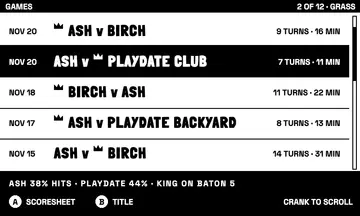
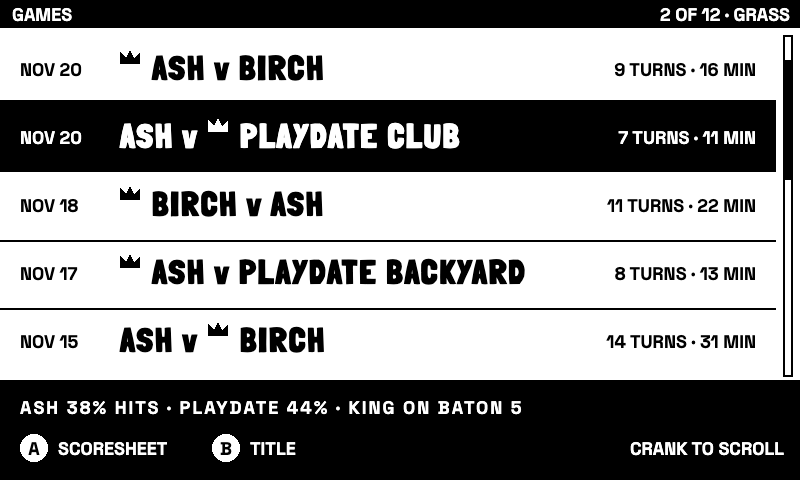
Saved games #
Finished games in a list, with who won, how many turns and how long, and a scoresheet a button away.
-
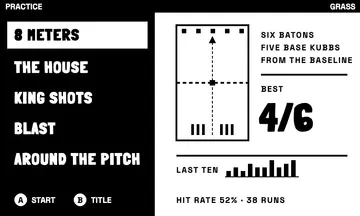
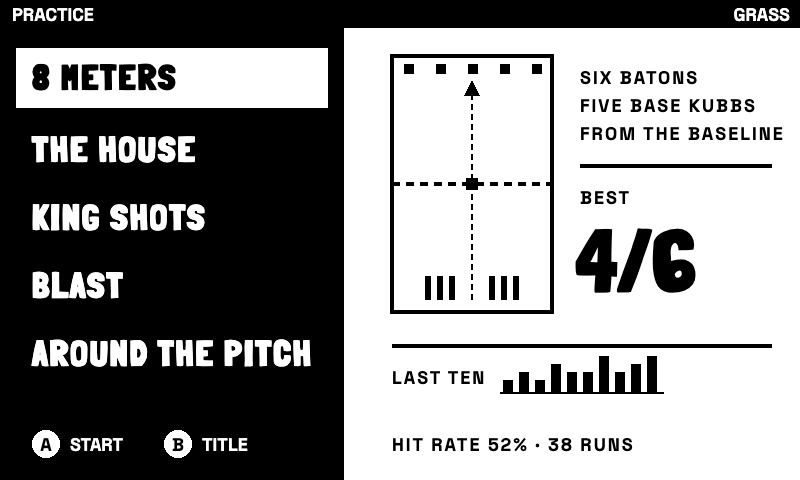
Practice drills #
Five drills, 8 METERS first, with the best score, the last ten runs and the hit rate.
Launcher #
How the game is to look on the Playdate’s home screen.
-
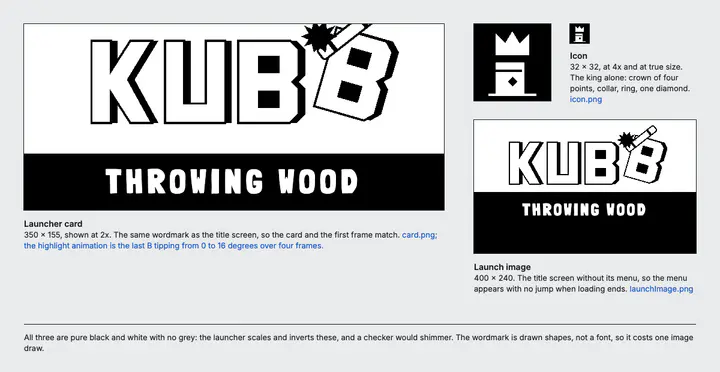
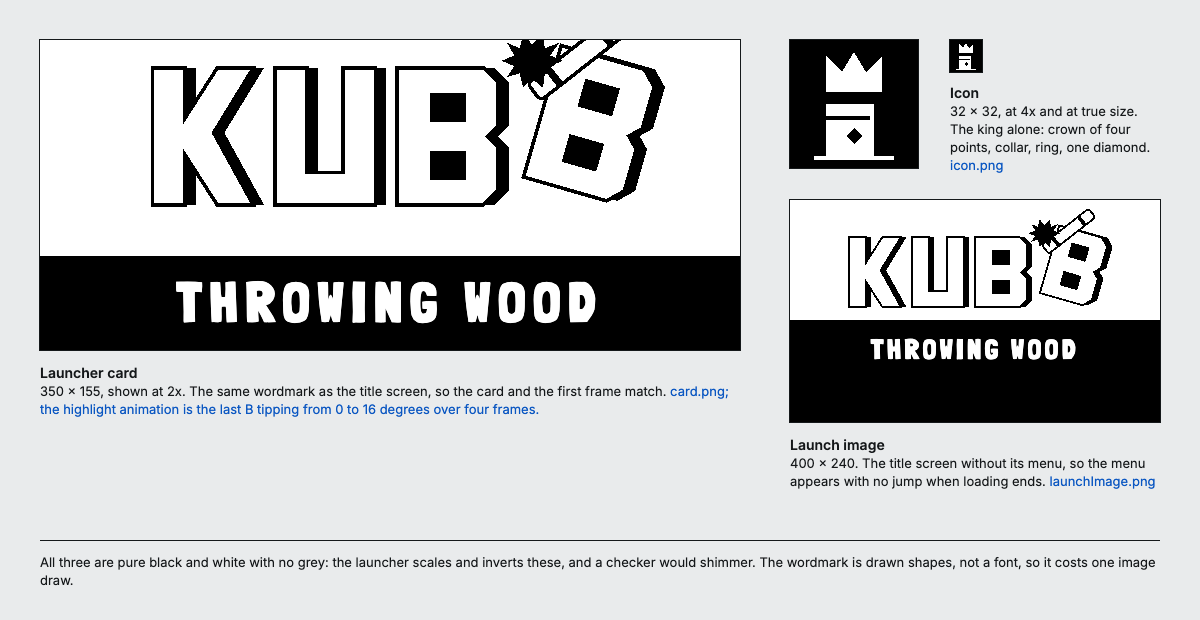
Card, icon and launch image #
The card at 350 by 155 with the title’s wordmark, whose last B tips over while the card is highlighted; the 32 by 32 icon, the king alone; and the launch image, the title without its menu. All pure black and white.