Thingy Model
A poseable Blender character built from Thingy’s original illustration, with a shared skeleton, four outfits, and short animation studies.
The librarian, from more than one angle.
- Status
- Active Jamie is building or running it.
- Dates
- Started (Begun November 2026)
- In his words
- Jamie on the things he built, question 33
- Topics
- Making Agents
Thingy Model is an editable three-dimensional version of Jamie’s librarian. The cream robot, navy coat, orange bow tie, and raised finger come from the original illustration. A body beneath the clothes gives the character joints that can be posed and animated.
Jamie described the idea in his interview: “Thingy should actually be a 3D model and be able to move around and engage with people”. He began building the model with Codex in November 2026, reviewing renders and the character live in Blender. The original image stayed beside the work. The artifacts below keep the intermediate models as well as the corrections.
The first prototype established the clothed character. Then the work went underneath the jacket: shorter mechanical legs, ankle collars, shallower feet, and arms built from the same vocabulary. Later passes returned to the head and hands, separated the shirt from the lapels, lowered the bow tie, and fitted the pockets to the coat. Lighting studies made the navy fabric easier to read. The bow tie’s dots and the badge’s letters became images wrapped onto their surfaces.
Four outfits now share one skeleton. The librarian wears the navy wool coat. The trail companion has a forest-green shell, orange daypack, and folded map. The workshop builder wears an indigo canvas vest and carries a laptop. The concert companion has a charcoal jacket, orange sound-wave shirt, wristband, and over-ear headphones in place of the usual ears. The antenna light can be switched on or off.
The latest checkpoint is v0.10. Its standard ears have a continuous tapered shape and sit against the head’s surface. The rig and short performance studies are working prototypes. More animation controls, facial acting, and clothing adjustments remain, as does preparing and testing a physical print for Jamie’s Bambu P2S. The page keeps the building process; it does not offer a finished print file.
The build #
- An editable Blender master holds the body, articulated hands, clothing, props, and a shared 40-bone skeleton.
- Four outfits switch on the same rig. The concert outfit replaces the standard ear housings with over-ear headphones.
- The bow tie’s dots and the name badge’s lettering are packed image textures on their surfaces.
- The antenna’s orange lens has an on/off control, with emission and a light in the scene.
- Pose assets and short animation studies test waving, sitting, walking, and presenting a laptop. Animator controls and motion still need refinement.
Blender Python Image textures
Artifacts #
Files from the project itself, kept as they were.
From illustration to body #
The reference, the first clothed prototype, and the work on proportions. These are successive checkpoints, not alternate finished characters.
-
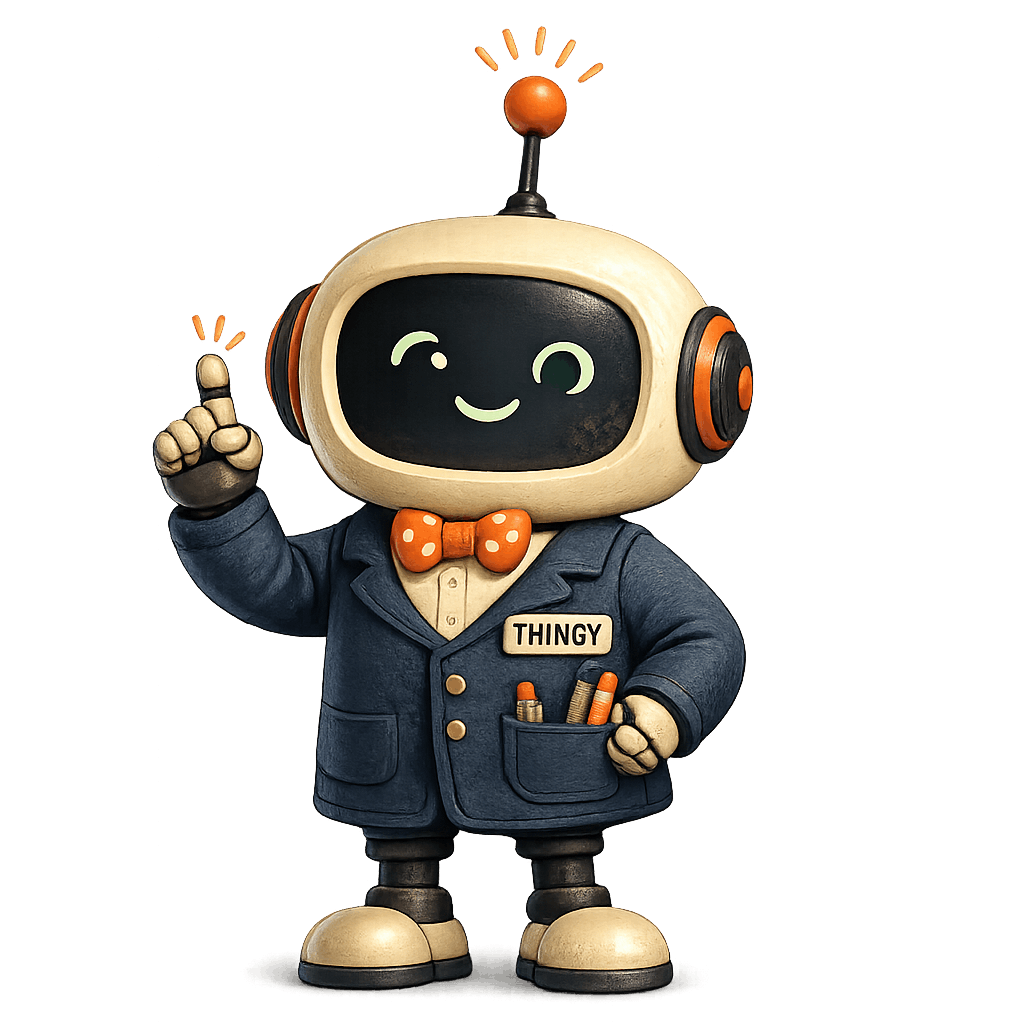
The original illustration #
The cream shell, dark screen, navy coat, orange bow tie, and short mechanical legs that the model follows. The back and concealed construction have to be inferred from this one view.
-
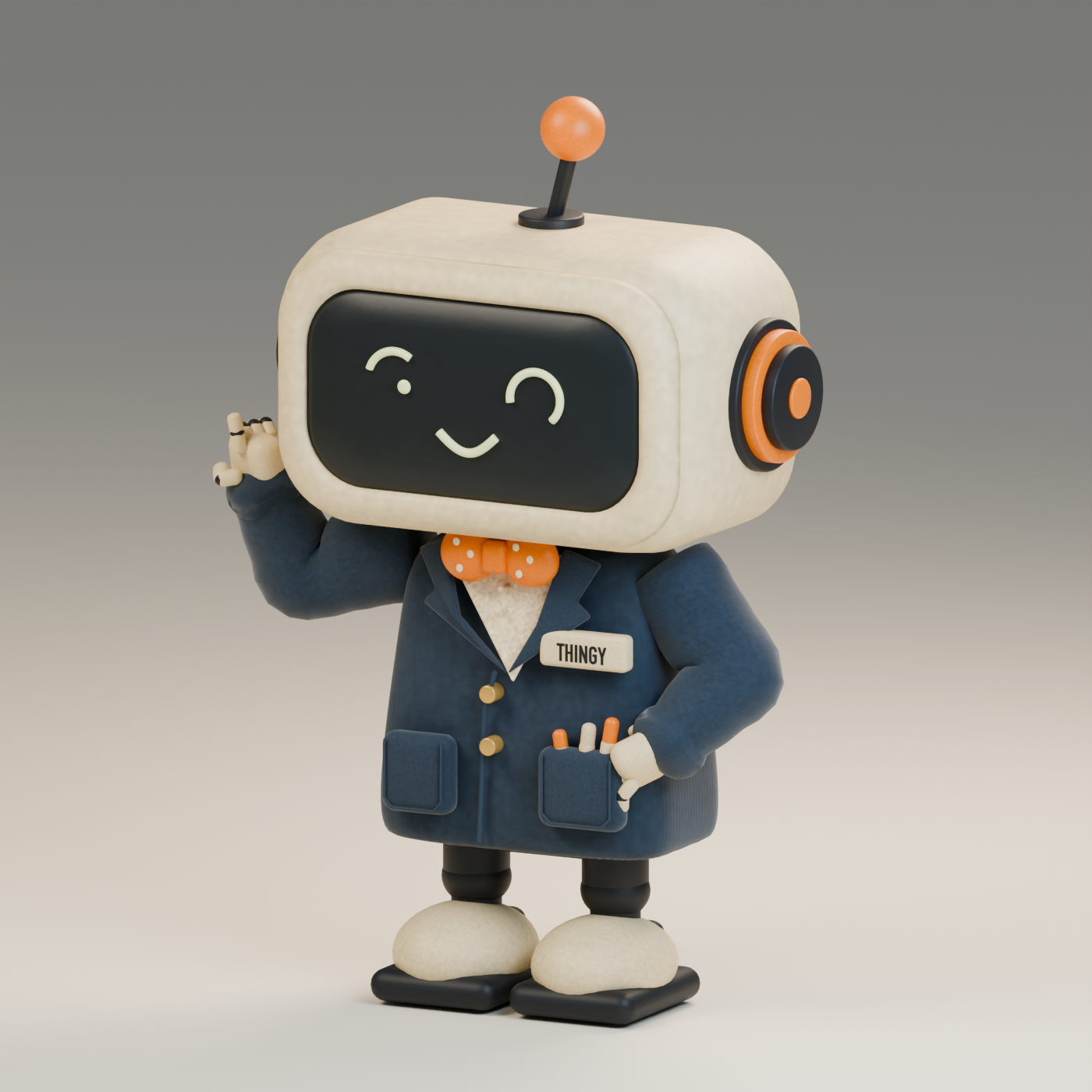
The first clothed prototype · v0.1 #
An early render with the librarian’s coat and raised finger. The proportions, hands, and feet would all be revisited.
-
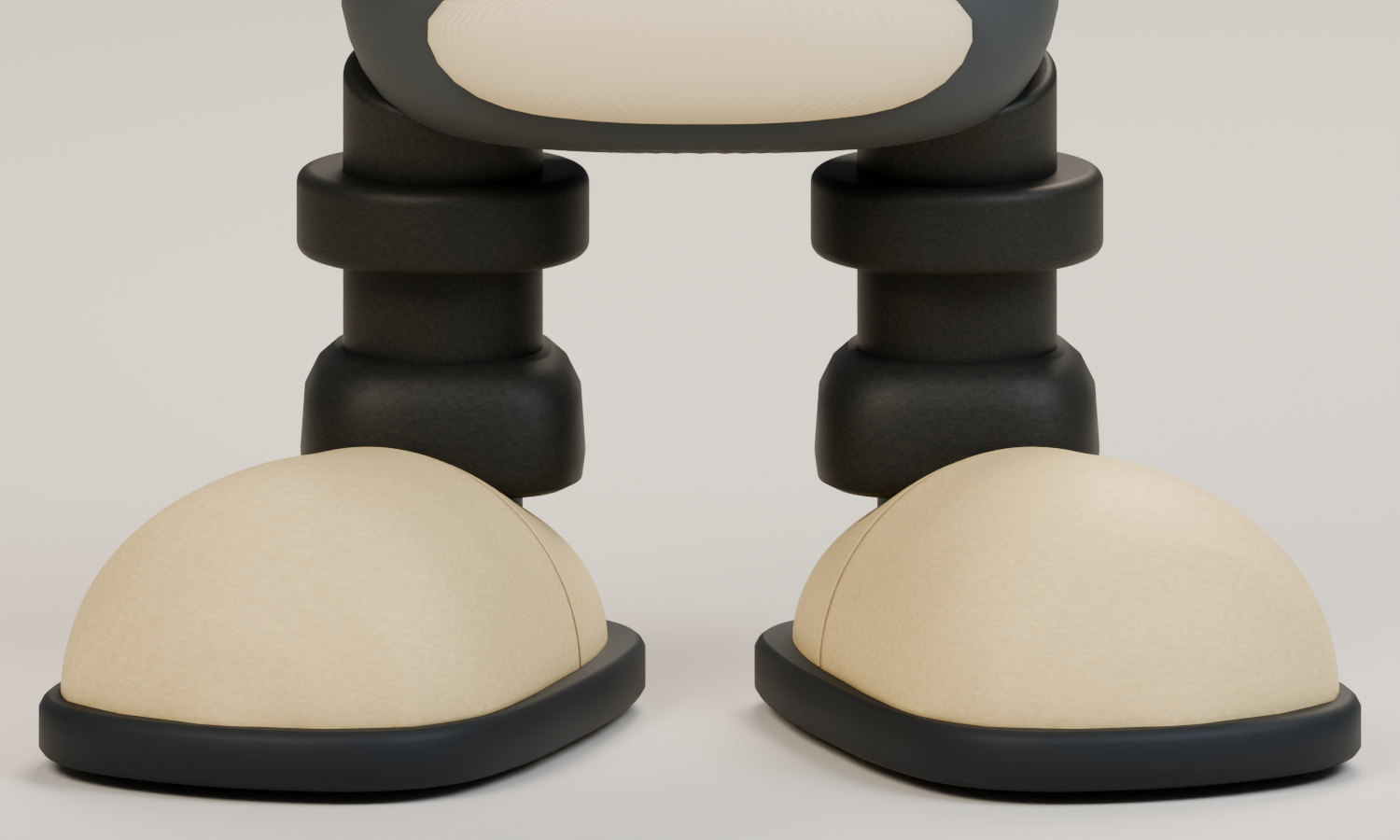
Legs, ankles, and feet · v0.3 #
Short shafts, collars, lower ankle cuffs, and shallow foot caps, rebuilt against the original. Their construction also informed the arms.
-
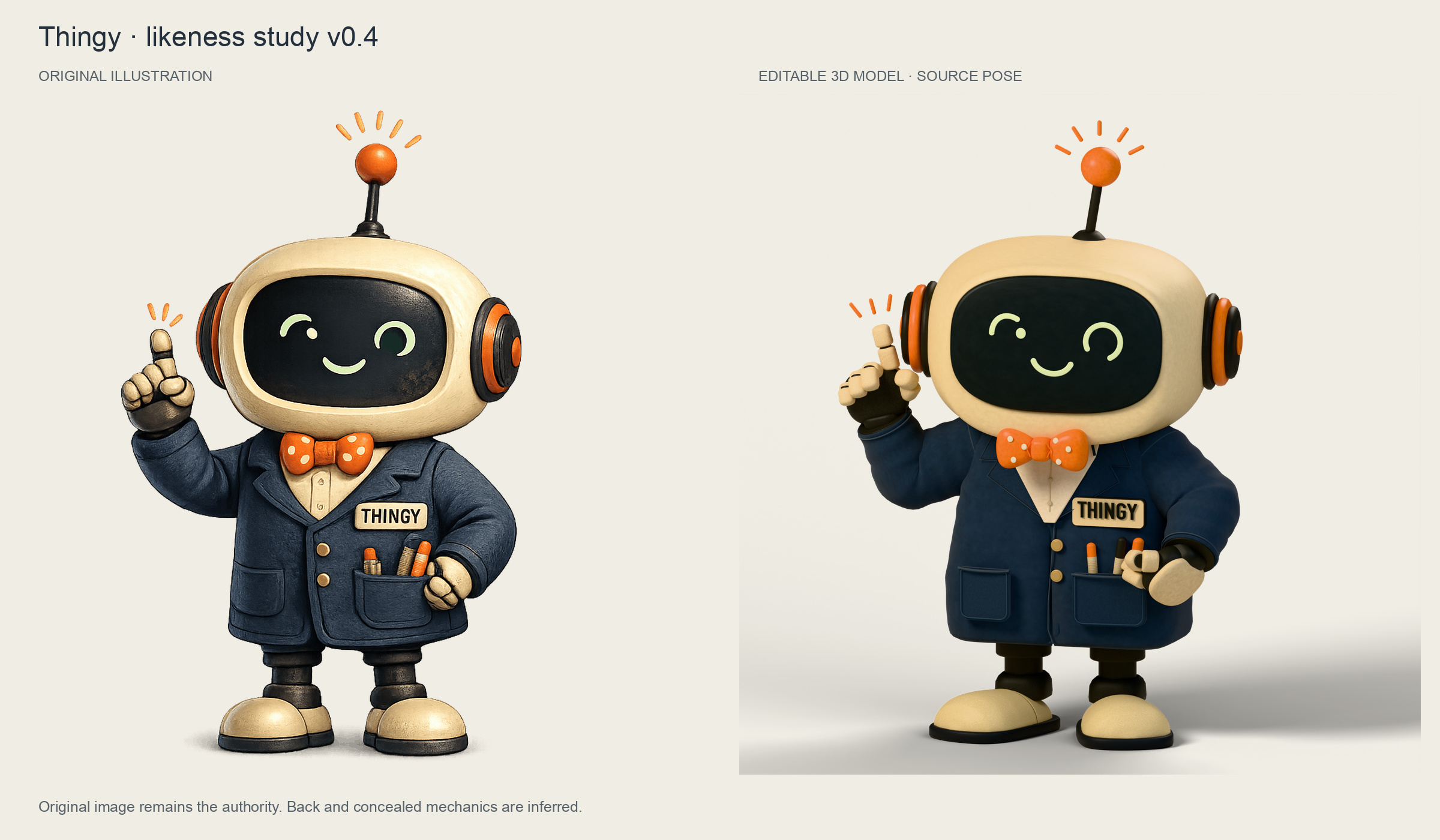
The illustration beside the model · v0.4 #
A comparison in the raised-finger pose after revisions to the head, screen, hands, and fitted coat. The later ear and surface corrections are still ahead.


Light, fabric, and movement #
Studies in lighting, surface detail, and articulation. The greeting and lit antenna retain earlier ear shapes.
-
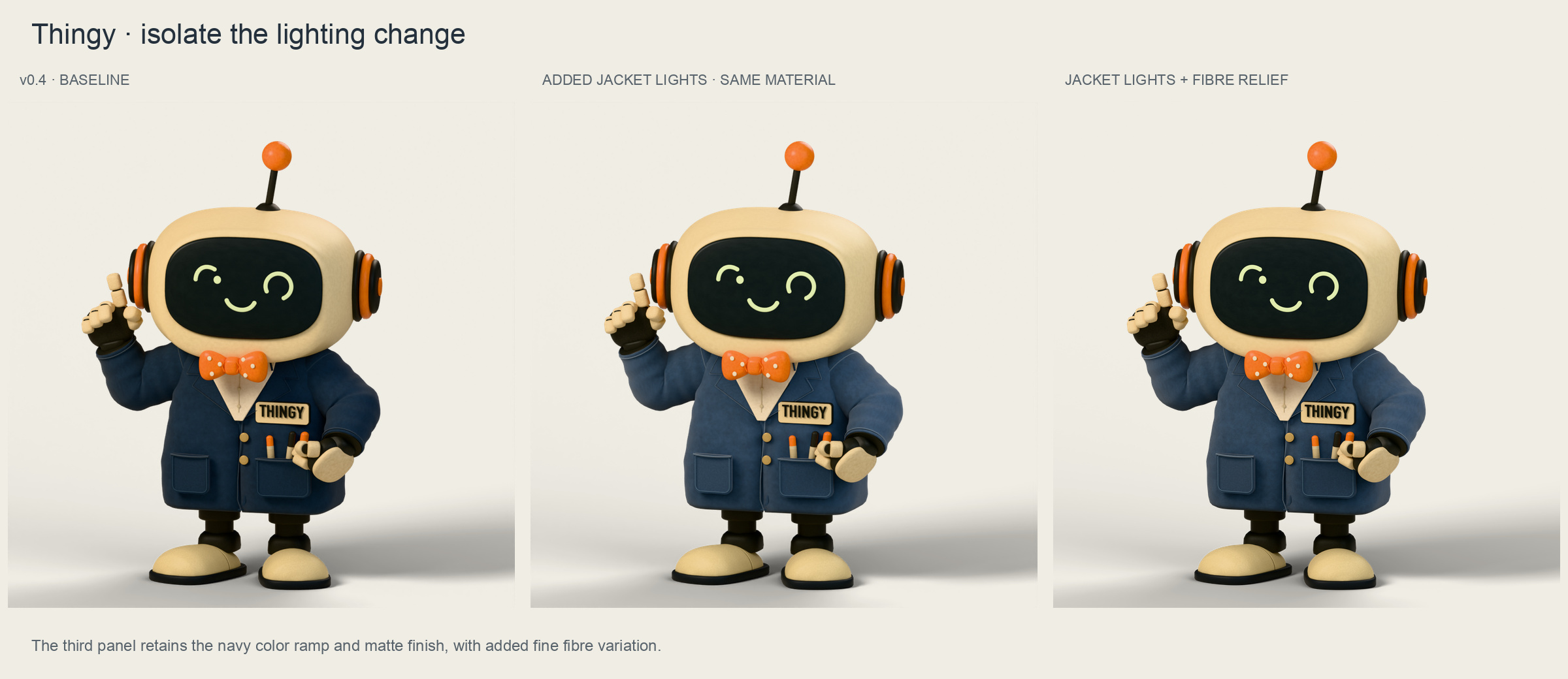
Isolating the jacket lighting · v0.5 #
The baseline, added jacket lights with the same material, and those lights with finer fabric relief. The study separates what the lighting changes from what the material changes.
-
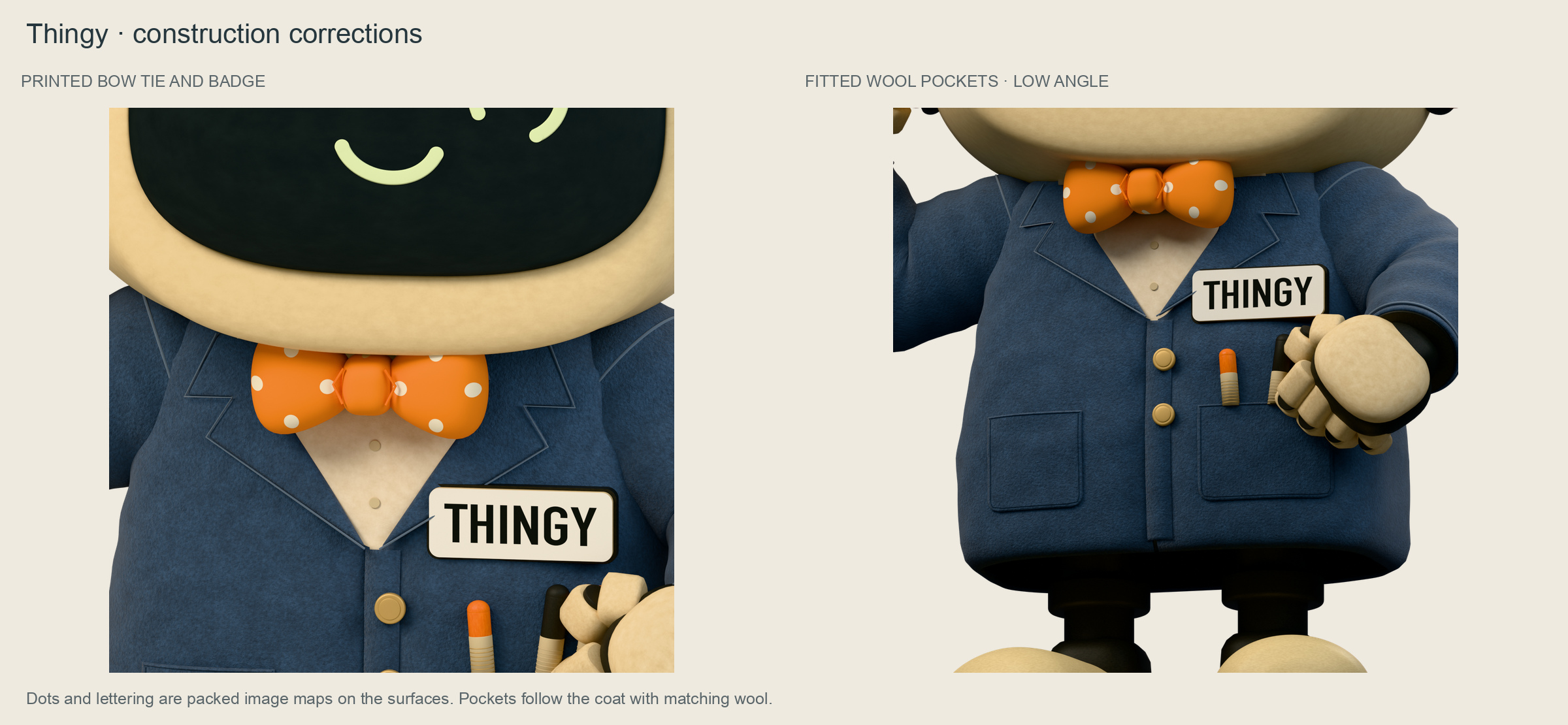
Printed details and fitted pockets · v0.7 #
Bow tie dots and badge lettering are image maps rather than floating pieces. The pockets follow the coat and use the same wool texture.
-
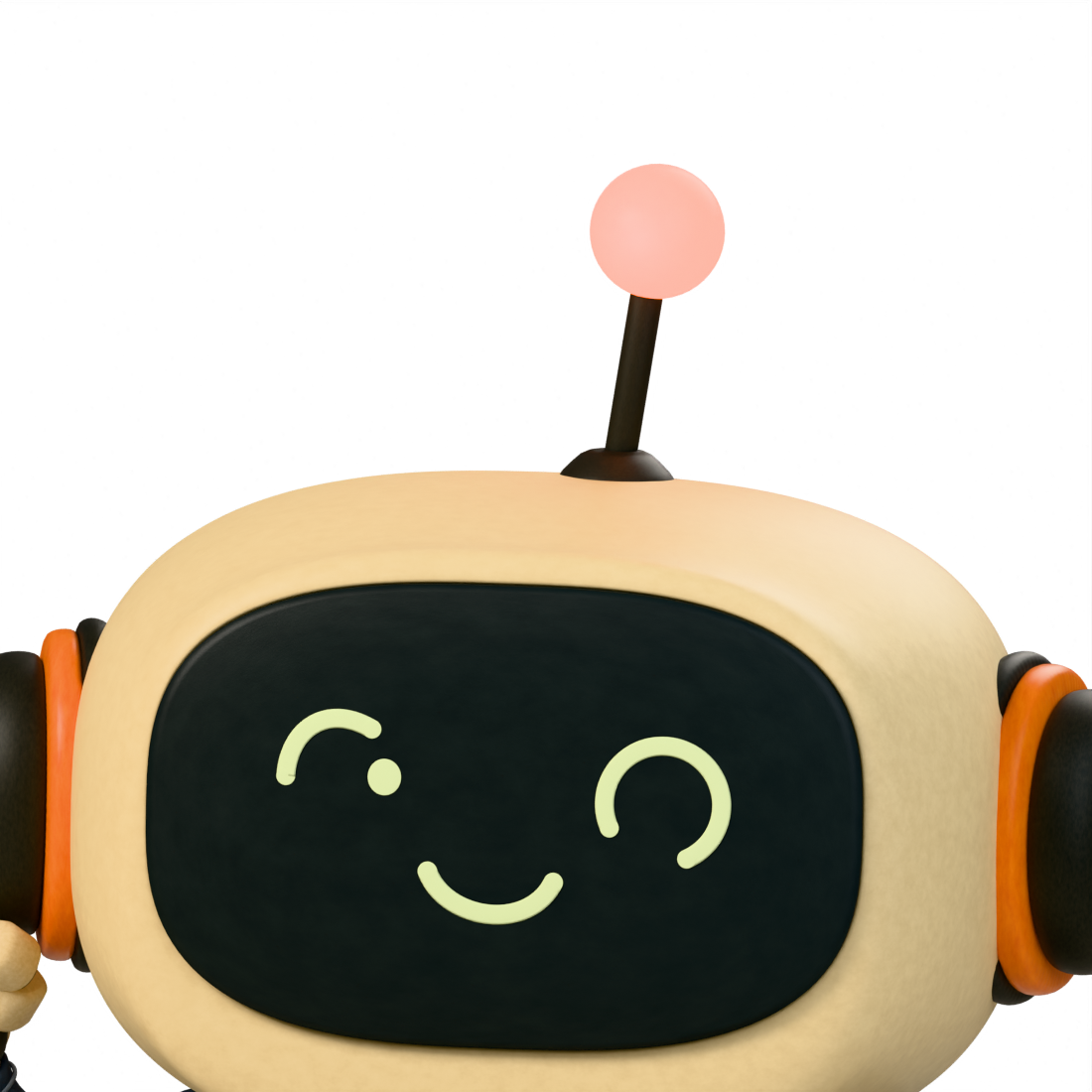
The antenna switched on · v0.6 #
A close view of the glowing lens. Its light can be switched off independently of the pose; the ear housings shown here were replaced later.
-
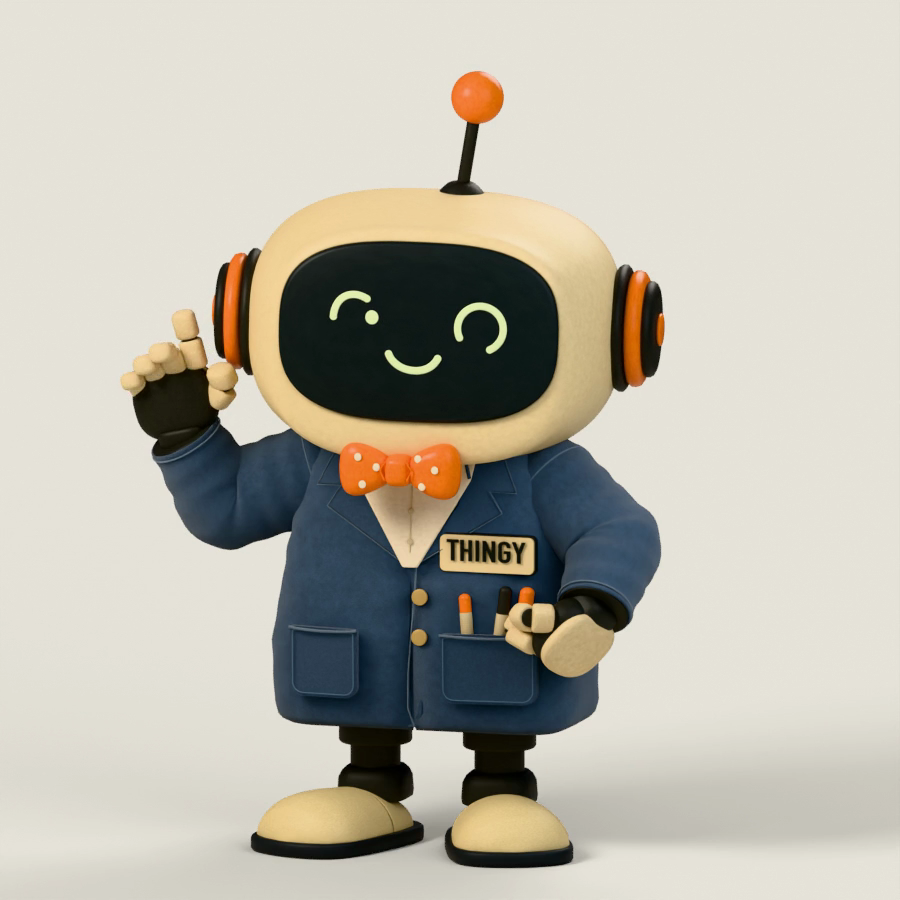
A four-second greeting · v0.5 #
A downloadable MP4 of the raised finger becoming an open-hand wave, rendered at 24 frames per second. It records an earlier model, before the printed details and ear revisions.


One character, four outfits #
The first wardrobe studies, followed by the concert headphones. Clothing and props share the body’s rig.
-
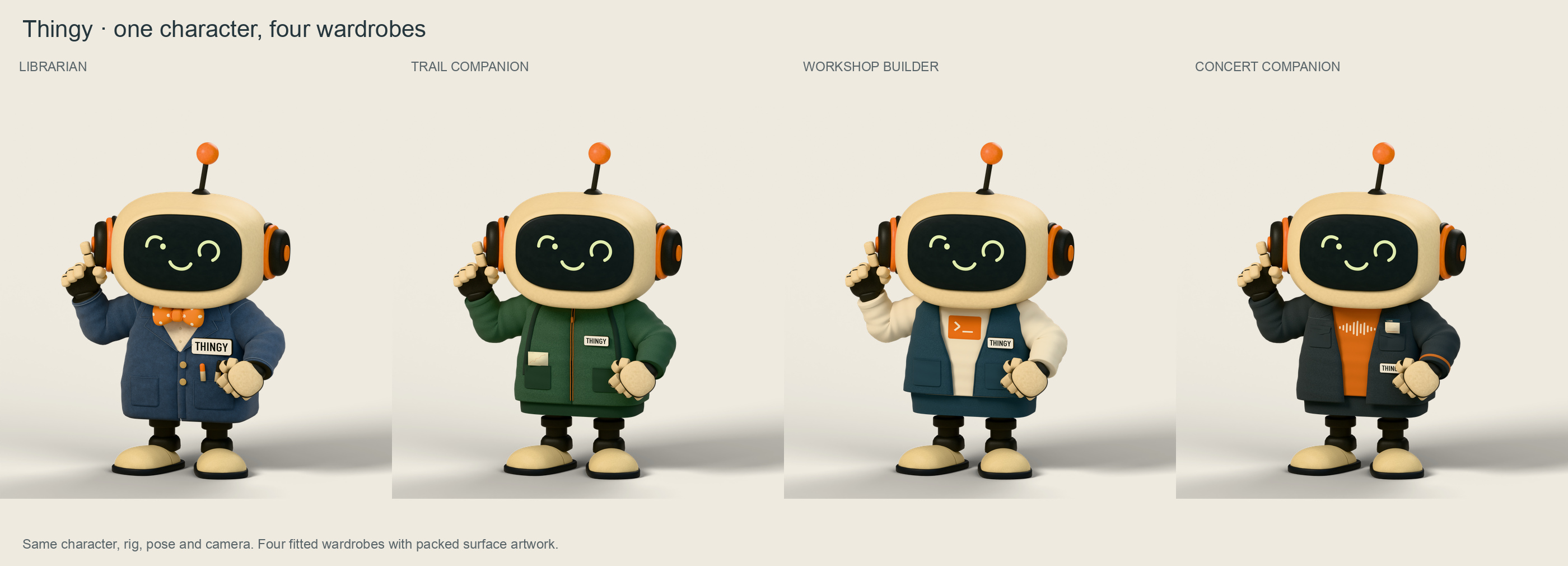
The first four outfits · v0.7 #
Librarian, trail companion, workshop builder, and concert companion in the same pose and camera. This sheet predates the smooth ear housings and concert headphones.
-
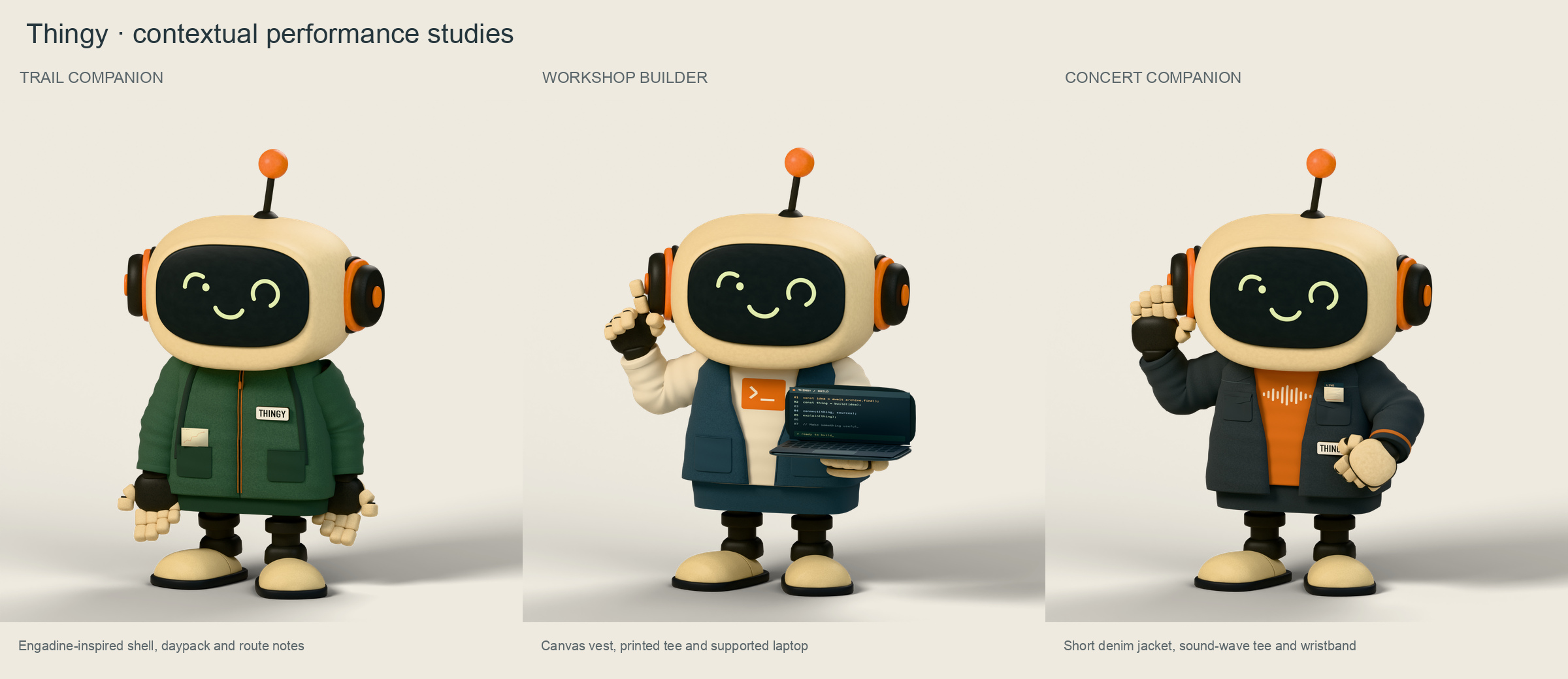
Trail, workshop, and concert studies · v0.7 #
A hiking shell and daypack, a canvas vest with a supported laptop, and a short concert jacket with a sound-wave shirt. These pose studies still show the earlier ears.
-
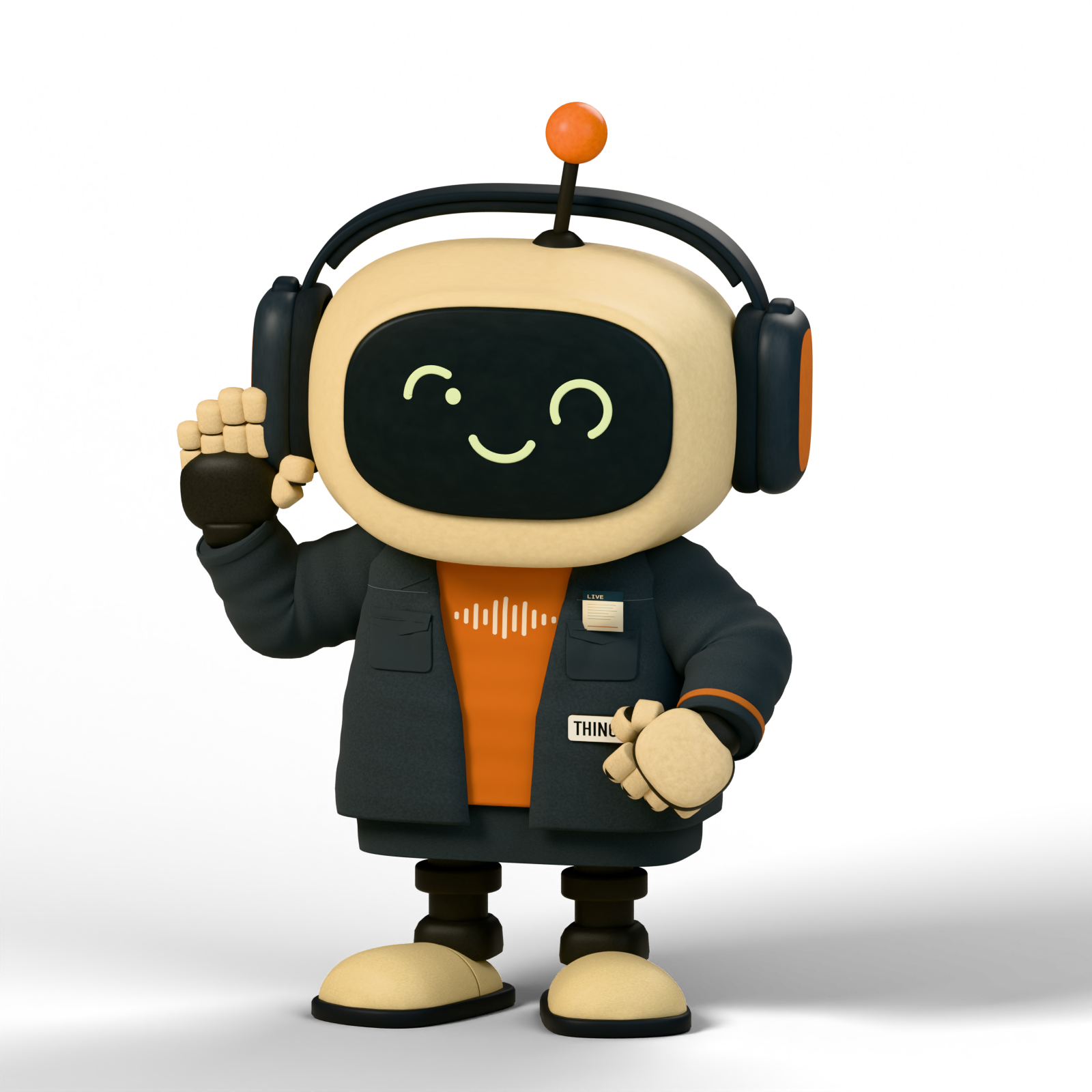
Over-ear headphones for the concert · v0.9 #
Cushioned ear cups replace the standard ears for this outfit. A padded headband passes behind the antenna; the short jacket, orange shirt, and wristband remain.


Returning to the reference #
The ear housings become smoother, then move out to sit against the head. The full librarian render is the v0.10 checkpoint.
-
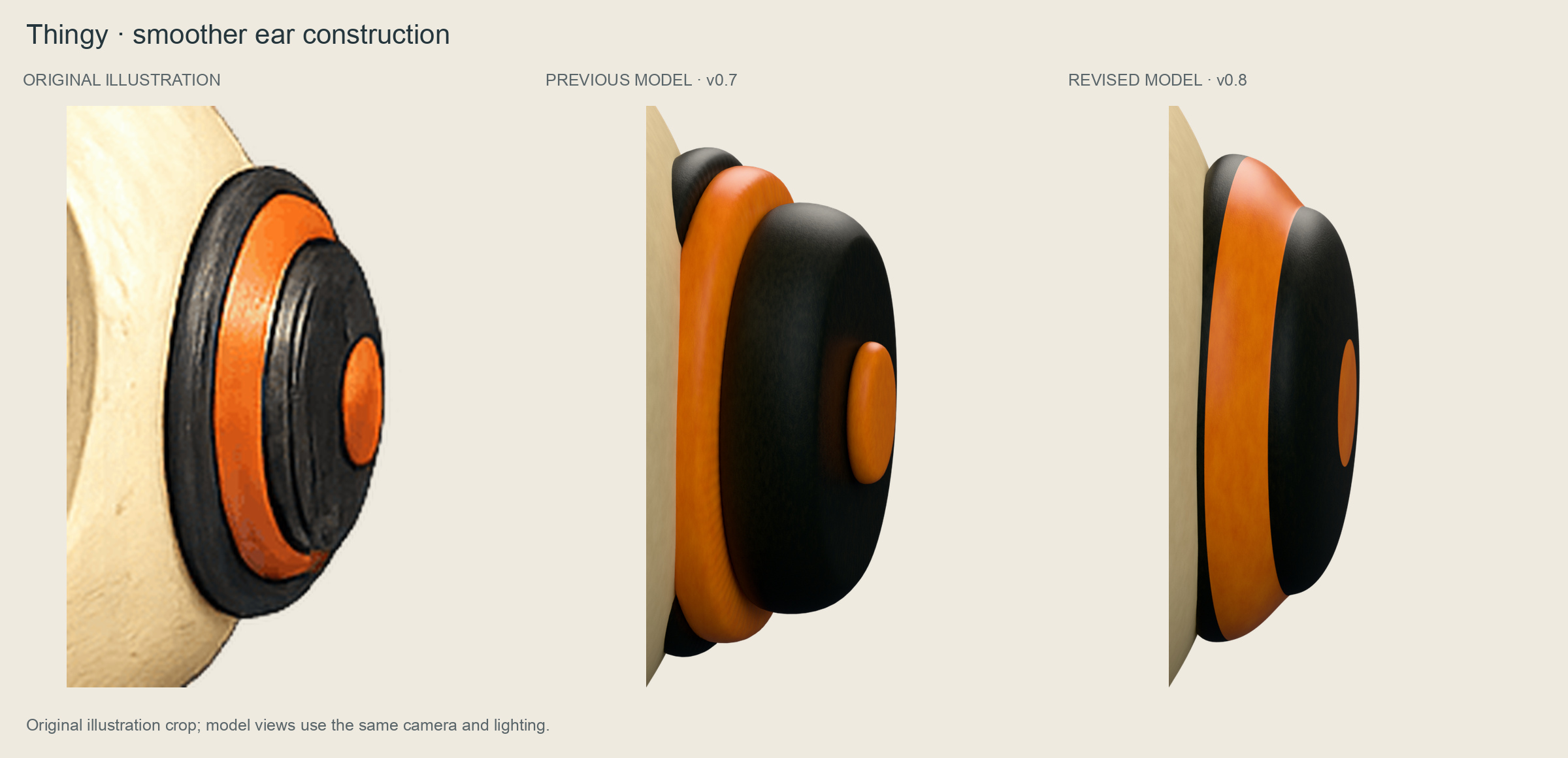
From stacked rings to a continuous housing · v0.8 #
The original illustration, the previous ear, and its replacement under matching model lighting. One tapered shell replaces the stepped construction.
-
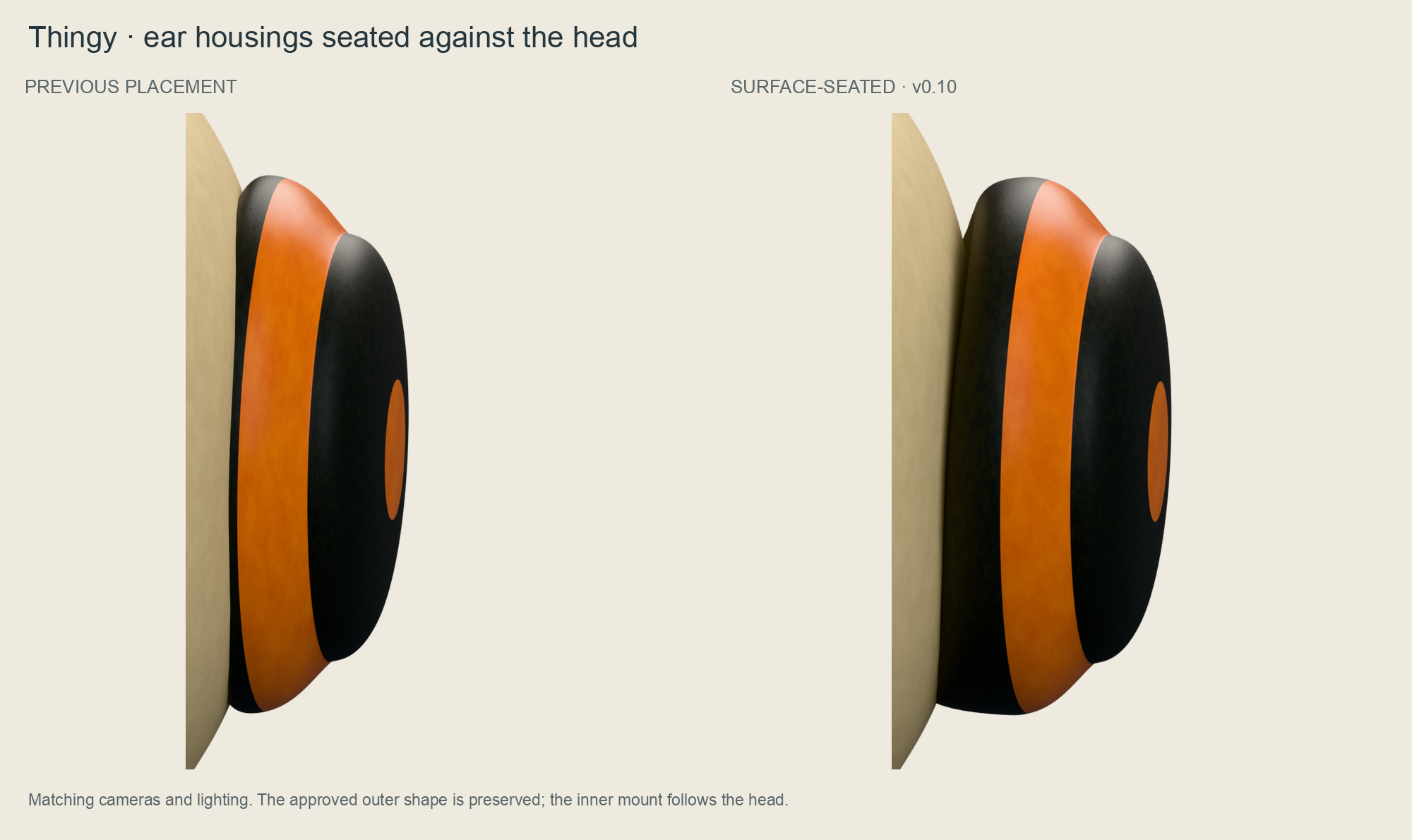
Sitting against the head · v0.10 #
The smoother shape is preserved while the housing moves outward. Its inner mounting face follows the curved head rather than sinking into it.
-
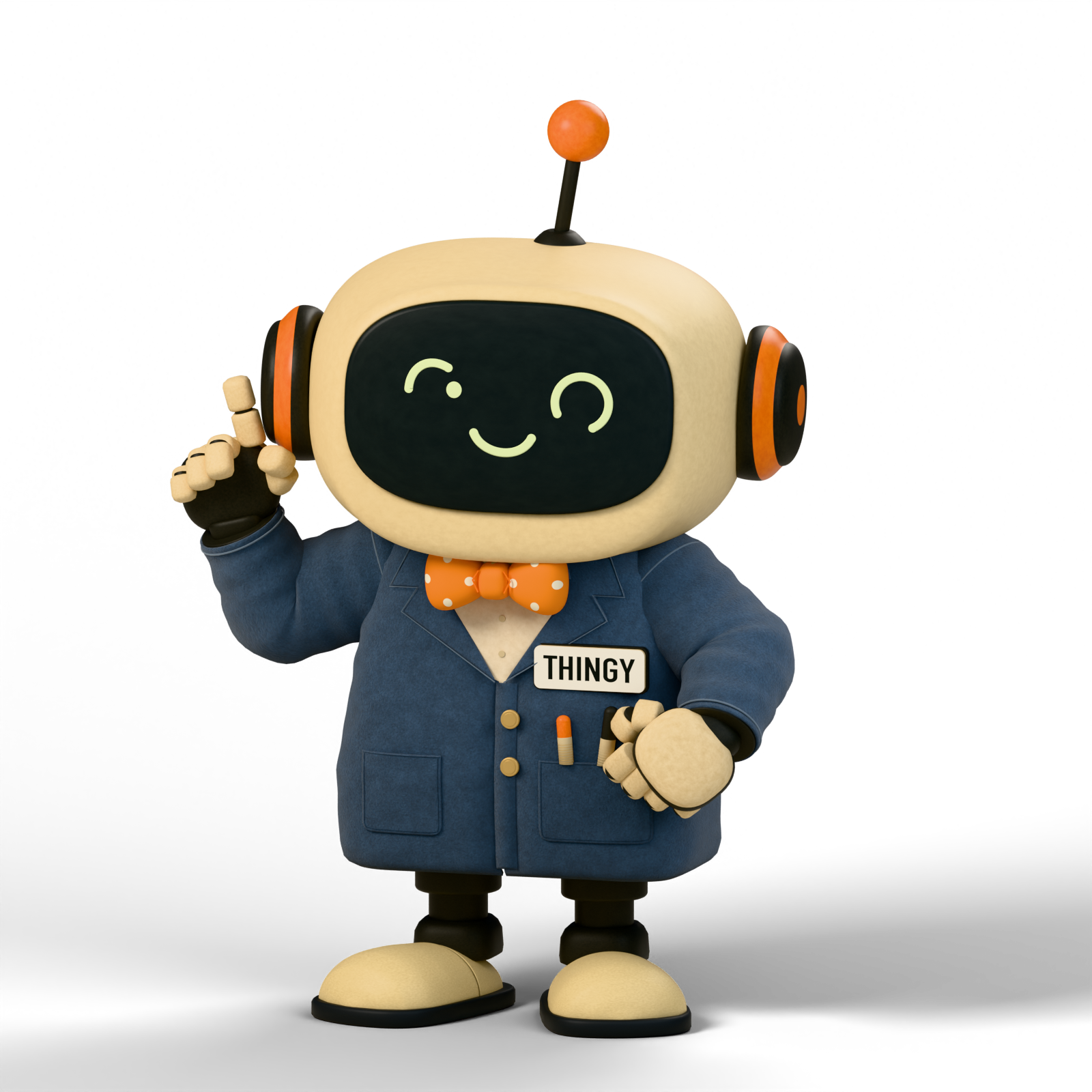
The librarian at v0.10 #
The current modeling checkpoint, with printed bow tie and badge, fitted pockets, textured wool, and the revised ears. The original raised-finger pose remains the comparison point.


Sources and evidence #
Checked every day from GitHub, sitemaps, feeds, the Internet Archive, and Tinylytics. Evidence never sets a status. That is Jamie’s call.
-
thingy.thingelstad.com/about/ reference
-
thingelstad.xyz/interviews/jamie-october-2026/#q33 reference
Commits and publications per month, last twelve months.
Connections #
-
Thingy Model gives a body to Thingy
The librarian’s original illustration becomes an editable character with a skeleton, clothing, and gestures. Source
-
Thingy Model depicts the librarian of Things I’ve built
Thingy keeps this site. The model gives its librarian poses and outfits for different settings. Source
History #
-
development
Thingy takes shape in three dimensions
Jamie builds an editable Blender character from Thingy’s illustration, with a shared skeleton, four outfits, and short animation studies. The record keeps the prototypes, lighting tests, and successive corrections to its ears. Source